





Porto on foot, from the Clérigos tower to the river: what is free and what needs a ticket
A half-day walk through the old centre of Porto, from São Bento station and the Clérigos tower to the cathedral, the Ribeira and the Dom Luís I bridge: what you see for nothing, which doors need a ticket, and what the partner sells.

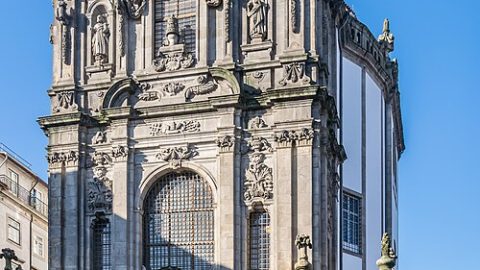
Nicolau Nasoni was a painter from Tuscany who arrived in Porto in 1725 to decorate the cathedral, and never left. Over the next forty years he gave the granite city its Baroque face: palaces, fountains, church fronts. For the Brotherhood of the Clérigos, a charity that looked after poor priests, he built a church on a steep and awkward plot, and behind it, finished in 1763, a bell tower about 75 metres high. For a long time it was the tallest building in Portugal, and ships coming up the Douro steered by it.
Nasoni took no fee for the work. He joined the brotherhood, died poor in 1773, and was buried in the church he had designed. His tower is still the best way to understand Porto before you walk it: a city on two hills, with a river far below. The practical question is which of its doors are worth paying for, because most of what makes the walk is free.
How the walk is laid out
The old centre is small and steep. If you start at the top and finish at the river, almost everything is downhill, and three hours are enough without going inside anywhere. Add an hour for each ticketed stop.
The order that works: São Bento station, up to the Clérigos tower, back down and across to the cathedral, down the stairs to the Ribeira, then over the bridge to Vila Nova de Gaia. Wear shoes with a grip. The paving is polished granite and the stairs are uneven.
What is free
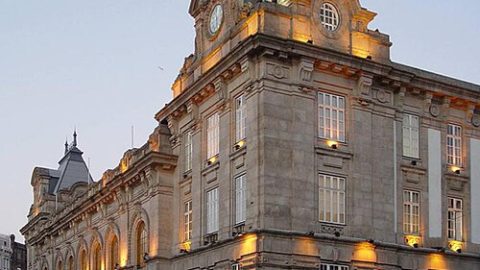
- São Bento station. The entrance hall is lined with about twenty thousand painted tiles by Jorge Colaço, set between 1905 and 1916: battles, a royal entry into Porto, and scenes of country life along the top. It is a working station, so you simply walk in.
- The Clérigos church. The oval church in front of the tower is free. Only the tower and the museum rooms behind it need a ticket.
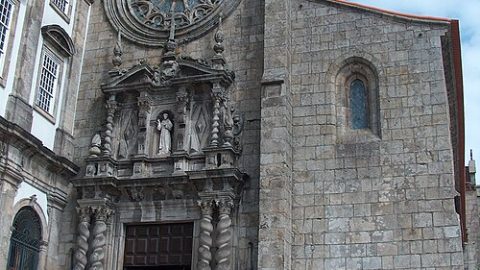
- The cathedral square. The terrace beside the cathedral looks over the roofs to the river and costs nothing. The cathedral itself was begun in the twelfth century and looks like a fortress, which in part it was. In 1387 King João I married Philippa of Lancaster here.
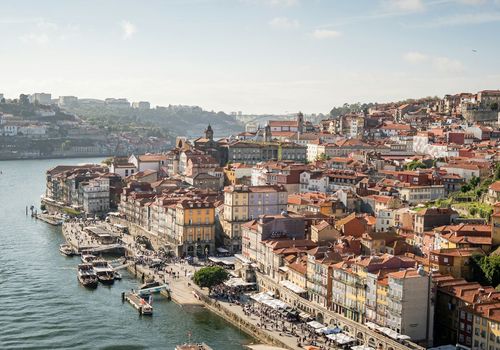
- The Ribeira. The riverside quarter of tall, narrow, tiled houses, part of the historic centre that UNESCO listed in 1996. The stairways that drop to it from the cathedral are the oldest streets in the city.
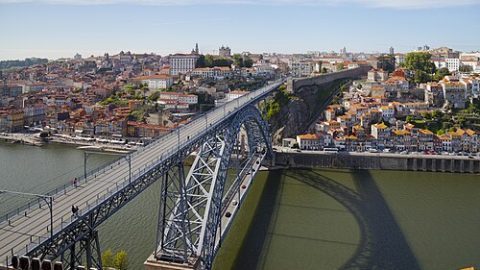
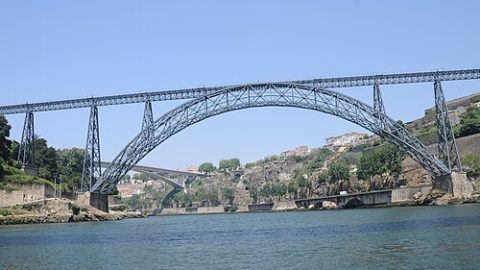
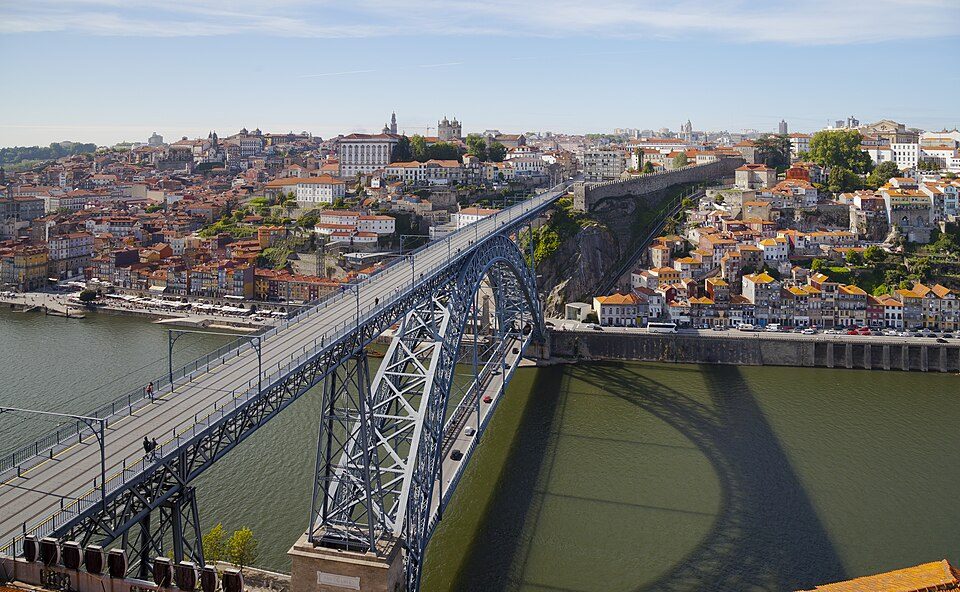
- The Dom Luís I bridge. Opened in 1886 and designed by Théophile Seyrig, who had been a partner of Gustave Eiffel. It has two decks. The lower one carries cars and has pavements. The upper one carries the metro and pedestrians, with no barrier between the two, so keep to the side.
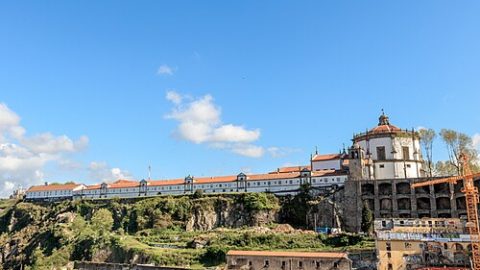
- The view from Gaia. The quay on the far bank, lined with the names of the port houses, gives the classic picture of Porto. Higher up, the terrace by the round church of Serra do Pilar gives a wider one.

The hall of São Bento station. You walk in from the street, with or without a train to catch. Photo: John Samuel, via Wikimedia Commons, CC BY-SA 4.0.
What needs a ticket
The Clérigos tower
A narrow spiral of a little over two hundred steps, with no lift, and a balcony at the top that holds few people at a time. The ticket also covers the museum in the house of the brotherhood. In season there is a line at the door, and late afternoon is the worst hour. The view is the best in the city, because it includes the cathedral.

From the top of the Clérigos tower: the cathedral and the white bishop's palace on the hill opposite. Photo: Jakub Hałun, via Wikimedia Commons, CC BY 4.0.
The cathedral cloister
The nave of the cathedral has usually been open without charge. The ticket is for the Gothic cloister, whose walls were covered in the eighteenth century with blue and white tile panels, and for the rooms around and above it. If you pay for one interior on this walk and do not mind missing the tower's view, this is the calmer choice.

The west front of the cathedral: two towers, a rose window and very little else. Photo: Bjørn Christian Tørrissen, via Wikimedia Commons, CC BY-SA 4.0.

The cloister, with its blue and white tile panels. This is the part behind the ticket. Photo: Daniel Villafruela, via Wikimedia Commons, CC BY-SA 4.0.
The Stock Exchange Palace and São Francisco
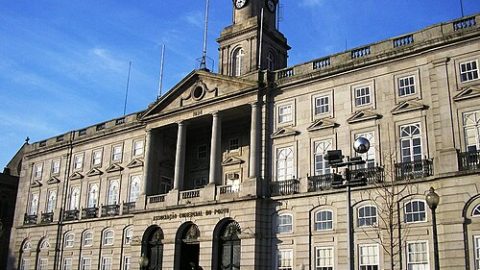
Near the river, the nineteenth-century Palácio da Bolsa is visited only on guided tours at fixed times, for its Arab Room. Next door, the church of São Francisco is Gothic outside and covered inside with gilded carved wood. Both sell their own tickets.
The port lodges
Port is made far up the Douro valley, and aged across the river from Porto, in Vila Nova de Gaia, where the barrels used to arrive by boat. Each lodge sells its own visit with a tasting, usually at a fixed time and in a set language. Book directly, and before lunch if you still plan to climb back up.
What the partner's listings include
- A cathedral ticket with an audio walk includes entry to the cathedral's ticketed part and an audio route through the city in the partner's app. The commentary is for the streets: the listing says it does not cover the inside of the cathedral.
- A Clérigos tower and museum ticket with an audio city walk works the same way: entry to the tower, and a walk that carries on to the river. No commentary inside the tower.
- The audio walks, on the old city, on port wine, on tiles, are commentary only, on your own phone. Entry tickets for the places they pass are bought elsewhere. Bring earphones.
These are the Porto tickets and audio walks our partner sells, with today's prices:
-
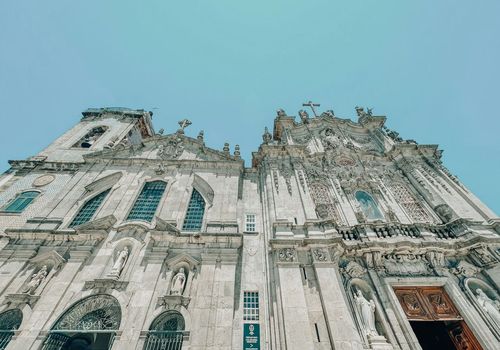 on WeGoTrip
History & Heritage Porto: Explore History & Culture with Porto Cathedral Ticket
Book on WeGoTripfrom529 den
-
 on WeGoTrip
Attraction Tickets Porto: Clerigos Tower & Museum Ticket with an Audio City Walk
Book on WeGoTripfrom830 den
-
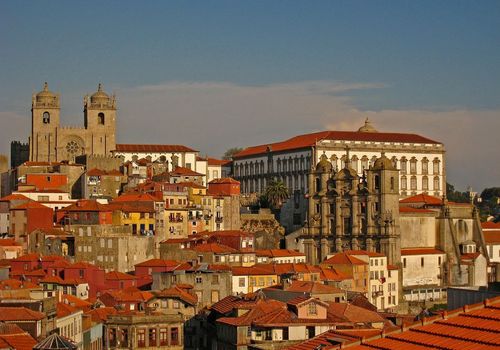 on WeGoTrip
City tours Porto: Highlights of the Northern Capital
Book on WeGoTripfrom553 den
-
 on WeGoTrip
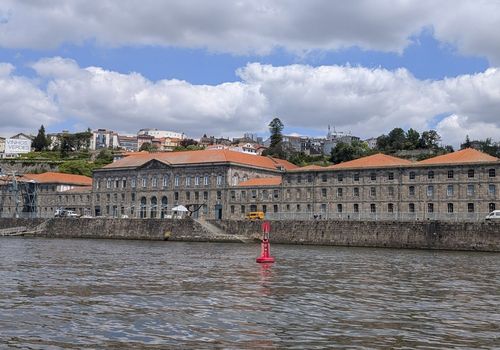
Walking Tours Porto: Self-Guided Audio Walk Through History and Port Wine
Book on WeGoTripfrom430 den
-
 on WeGoTrip
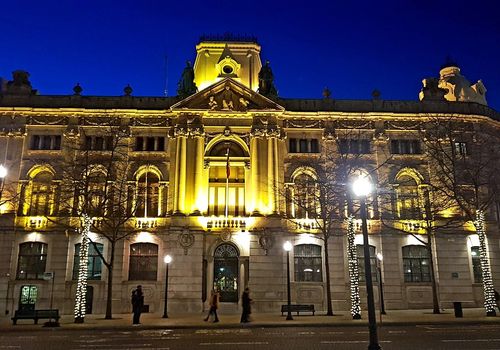
Sightseeing Tickets Porto: Self-Guided Audio Walk Through History and Azulejos
Book on WeGoTripfrom615 den
Sold and delivered by WeGoTrip. You book on their site at their price; Viaqui may earn a commission, at no extra cost to you.
Getting back up
The walk ends at the bottom of a hill. There are three ways back:
- cross to Gaia on the lower deck, climb or take the cable car to the upper end of the bridge, and walk back over the upper deck, which lands you close to the cathedral;
- take the funicular that runs from the foot of the bridge on the Porto side up to the old town wall;
- walk up Rua das Flores, a long pedestrian street that climbs gently back to São Bento.
The cable car and the funicular are paid. The street is not, and it is the most pleasant of the three.
When to go
Start in the morning. The station hall and the cathedral terrace are quiet before ten, and the tower has no line early. The Ribeira faces south and is at its best in late afternoon, when the light is on the houses and the Gaia quay is in shade. Opening hours for the cathedral change with the season: see our page for Porto Cathedral.
From here
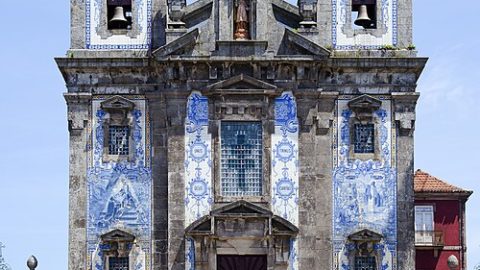
From the Gaia end of the Dom Luís I bridge the riverside promenade runs west past the lodges. Back in Porto, the tiled church fronts of Santo Ildefonso and Carmo are free to look at, and São Bento has trains up the Douro valley for a second day. See what else there is in Porto, or open the trip planner for Portugal.
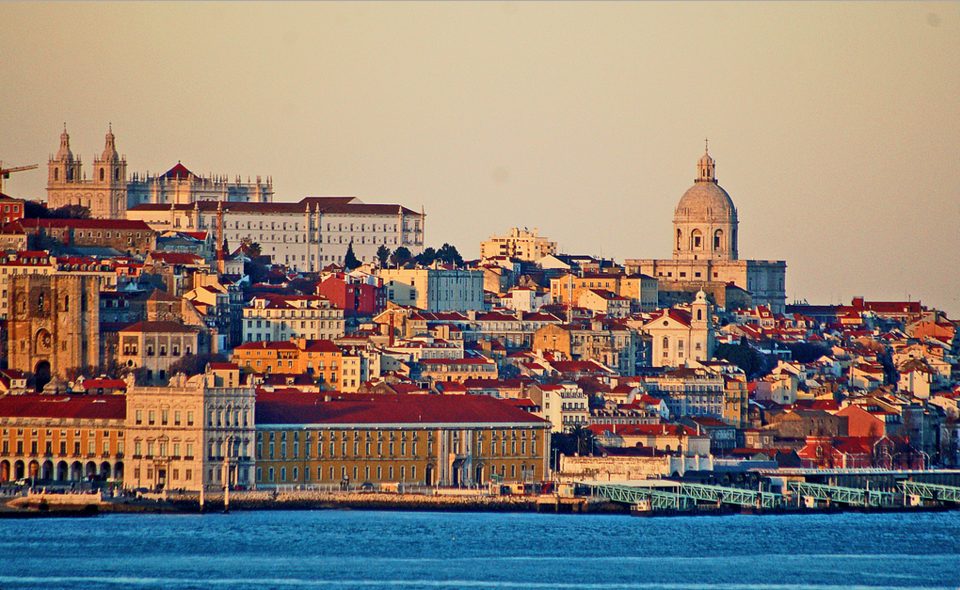
Cover photo: Michael Gaylard, via Wikimedia Commons, CC BY 4.0.
Frequently asked questions
What is free to see in Porto?
The tiled hall of São Bento station, the Clérigos church, the cathedral square and its view, the Ribeira, both decks of the Dom Luís I bridge and the quay of Vila Nova de Gaia are all free.
Is Porto Cathedral free to enter?
The nave has usually been open without charge. The cloister with its tile panels and the rooms around it need a ticket. Check the current arrangement before you go.
Is the Clérigos tower worth climbing?
Yes, if you are comfortable on a narrow spiral of a little over two hundred steps with no lift. It gives the best view of the city, cathedral included. Go early to avoid the line.
Can you walk across the Dom Luís I bridge?
Yes, on both decks, for free. The lower deck has pavements beside the cars. The upper deck is shared with the metro, with no barrier, so keep to the side.
How long does it take to walk the old town of Porto?
About three hours from São Bento station to the river and across the bridge, without going inside anywhere. Add about an hour for each ticketed stop.