





Pinacoteca di Brera in Milan: is it worth it, and what to see in ninety minutes
Whether the Pinacoteca di Brera deserves a place in a short stay in Milan, the paintings to stop for in ninety minutes, what the ticket covers now that the modern collection has moved, and what the partner's listings include.

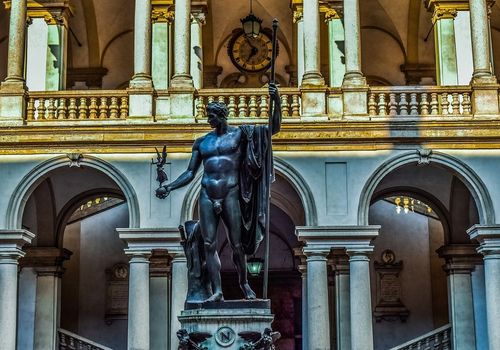
In the middle of the courtyard of the Brera palace stands a bronze Napoleon, naked, larger than life, holding a small winged Victory in one hand. It was cast from a model by Antonio Canova, who showed the emperor as Mars the Peacemaker. He is there because the gallery upstairs is his doing.
Under French rule, churches and convents all over northern Italy were closed, and their paintings were sent to Milan, the capital of Napoleon's Kingdom of Italy, to make a national gallery on the model of the Louvre. It opened on 15 August 1809, the emperor's birthday. Two centuries later most visitors to Milan spend their effort on a slot for the Last Supper and on the roof of the cathedral, and wonder whether a painting gallery deserves an hour and a half of a short stay.
Is it worth it?
If you like Italian painting at all, yes. The reason is the way the collection was formed. This was not a prince's cabinet of small pictures chosen to please. It is made of altarpieces, many of them enormous, taken from chapels in Venice, Lombardy, Emilia and the Marche, and several are works you have seen in books all your life.
It is also an easy museum. The rooms are on one floor and form a single loop, so you cannot get lost, and ninety minutes are enough. It is rarely crowded the way the Uffizi is, and tickets can usually be had at short notice, which cannot be said of the Last Supper.
Skip it if what you want from Milan is design, fashion or modern art, or if you are travelling with small children who have already done one museum that day.
The building is half the visit
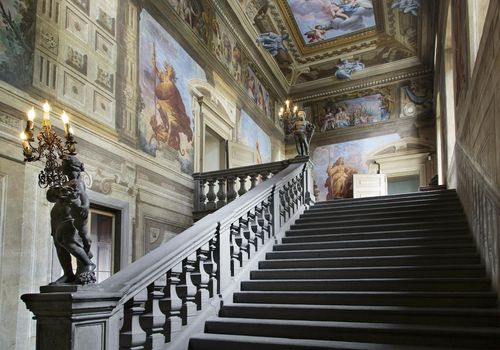
The palace was a Jesuit college, begun in the seventeenth century. When the order was suppressed in 1773, Empress Maria Theresa of Austria turned it into a house of learning: an academy of fine arts, founded in 1776, a library, an observatory and a botanical garden. All four are still here. Art students cross the courtyard with portfolios, and the gallery is up the double staircase, on the first floor.
The courtyard is free to enter. So is the small botanical garden behind the palace, when it is open.
What to see, in order
- Mantegna, the Lamentation over the Dead Christ. A body seen from the soles of the feet, shortened so sharply that it seems to slide towards you. It is a small picture, and it was still in the painter's studio when he died in 1506.
- Giovanni Bellini, the Pietà. Mother and son, cheek to cheek, against a cold sky.
- Gentile and Giovanni Bellini, St Mark Preaching in Alexandria. One of the largest pictures in the building, made for a confraternity in Venice. Gentile began it, and his brother finished it after Gentile's death in 1507.
- Piero della Francesca, the Montefeltro Altarpiece. Federico da Montefeltro kneels in armour before the Virgin, in profile as always. Above her head an egg hangs from a shell on a thread.
- Raphael, the Marriage of the Virgin. Signed and dated 1504 on the temple in the background, when he was twenty-one.
- Caravaggio, the Supper at Emmaus. Painted in 1606, in the months after he killed a man in Rome and fled. It is far darker and quieter than his earlier version in London.
- Hayez, The Kiss. Painted in 1859, the year Lombardy was freed from Austrian rule, and read ever since as a picture of the new Italy. It hangs near the end of the loop.

Mantegna's Dead Christ, seen from the feet. Photo: reproduction of a painting in the public domain, via Wikimedia Commons.

St Mark Preaching in Alexandria, by the Bellini brothers, with visitors for scale. Photo: SunOfErat, via Wikimedia Commons, CC BY 3.0.

The centre of Raphael's Marriage of the Virgin, painted in 1504. Photo: Miguel Hermoso Cuesta, via Wikimedia Commons, CC BY-SA 4.0.

The Kiss, by Francesco Hayez, 1859. Photo: Miguel Hermoso Cuesta, via Wikimedia Commons, CC BY-SA 4.0.
On the way you pass a restoration workshop with glass walls, where conservators work in view of the public.
What the ticket covers now
A ticket to the Pinacoteca covers the gallery in the Brera palace, usually for a reserved time. In December 2024 a second building opened a short walk away: Palazzo Citterio, which now shows the gallery's twentieth-century collections. It has been sold with a combined ticket, so if modern art matters to you, check whether yours includes it. Older descriptions of the Brera, and some listings, still mention modern works among its highlights.
The gallery is closed on Mondays.
Reading the partner's listings
- A Pinacoteca di Brera ticket is entry to the gallery and nothing more. The list above is all you need to go with it.
- A ticket with an audio tour adds about an hour of commentary in the partner's app, with directions from room to room. Bring earphones.
- A ticket and audio tour with a walk through the Brera quarter adds an audio walk around the streets outside.
- Listings called only "audio tour", of the gallery, of the gallery and the quarter, or of the district alone, do not include entry. You buy your ticket separately.
These are the Brera tickets and audio tours our partner sells, with today's prices:
-
 on WeGoTrip
Art & Museums Milan: Pinacoteca di Brera Ticket & Audio Tour with Brera Quarter Walk
Book on WeGoTripfrom601 MDL
-
 on WeGoTrip
History & Heritage Milan: Pinacoteca di Brera Ticket & Audio Tour
Book on WeGoTripfrom551 MDL
-
 on WeGoTrip
Art & Museums Milan: Pinacoteca di Brera & Brera Quarter Audio Tour
Book on WeGoTripfrom140 MDL
-
 on WeGoTrip
Walking Tours Milan: Pinacoteca di Brera Audio Tour
Book on WeGoTripfrom140 MDL
-
 on WeGoTrip
Art & Museums Milan: Pinacoteca di Brera Ticket
Book on WeGoTripfrom501 MDL
-
 on WeGoTrip
Cultural Tours Milan: Brera District Audio Tour
Book on WeGoTripfrom100 MDL
Sold and delivered by WeGoTrip. You book on their site at their price; Viaqui may earn a commission, at no extra cost to you.
Practical notes
- The nearest metro stations are Lanza, on line M2, and Montenapoleone, on line M3, each a few minutes on foot.
- Bags and umbrellas go into lockers at the entrance.
- The first hour of the day and late afternoon are the quietest.
Hours and special openings are on our page for the Pinacoteca di Brera.
From here
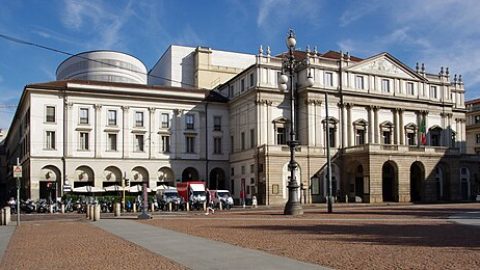
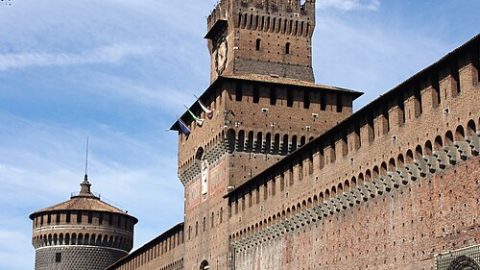
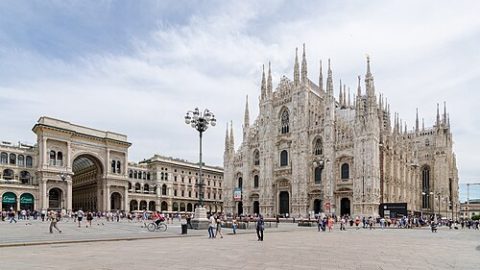
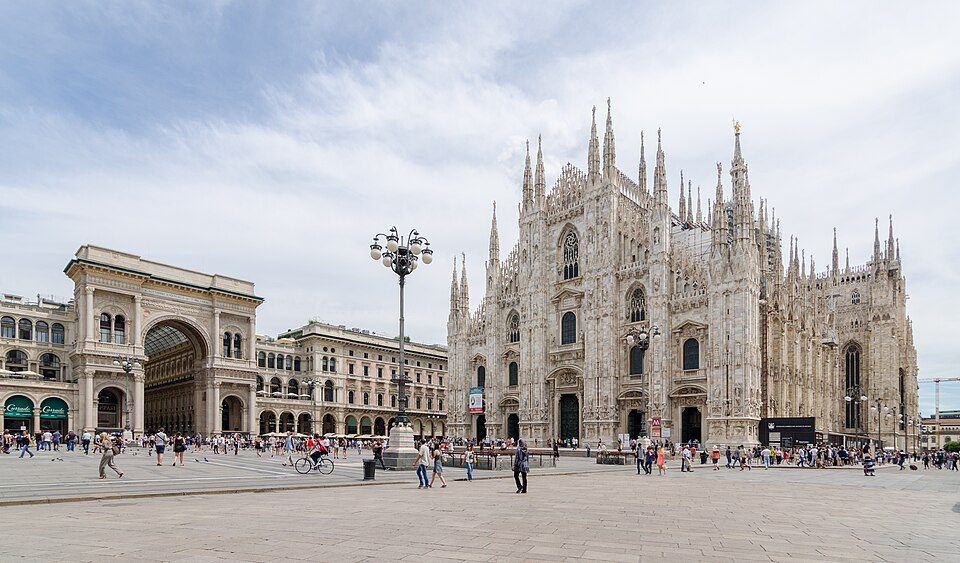
The streets around the palace, Via Brera and Via Fiori Chiari, are the old artists' quarter, now full of galleries and restaurant tables. Sforza Castle is ten minutes to the west, with its free courtyards and the park behind it. La Scala is five minutes south, and Milan Cathedral a quarter of an hour. For the rest of Milan, or a route through the north, open the trip planner for Italy.
Cover photo: Paolo Picciati, via Wikimedia Commons, CC BY-SA 3.0.
Frequently asked questions
Is the Pinacoteca di Brera worth visiting?
Yes, if you like Italian painting. It holds Mantegna, Bellini, Piero della Francesca, Raphael, Caravaggio and Hayez on one floor, it is easy to walk in ninety minutes, and it is rarely as crowded as the better-known sights of Milan.
How long does the Pinacoteca di Brera take?
About ninety minutes for the main rooms at a steady pace. The gallery is a single loop on one floor.
What are the most famous paintings in the Brera?
Mantegna's Lamentation over the Dead Christ, Raphael's Marriage of the Virgin, Piero della Francesca's Montefeltro Altarpiece, Caravaggio's Supper at Emmaus and The Kiss by Francesco Hayez.
Does the Brera ticket include Palazzo Citterio?
Not necessarily. Palazzo Citterio, which opened in December 2024 with the gallery's twentieth-century collections, has been sold with a combined ticket. Check what yours covers.
Which day is the Pinacoteca di Brera closed?
It is closed on Mondays. Hours and special openings change, so check the current ones before you go.