
















Ostia Antica or Tivoli: a half-day trip from Rome by train or bus, and which one to choose
How to reach Ostia Antica and Tivoli without a car, what you see at Ostia, how Villa d'Este, Hadrian's Villa and Villa Gregoriana differ, where Castel Gandolfo fits, and what the partner tickets include.

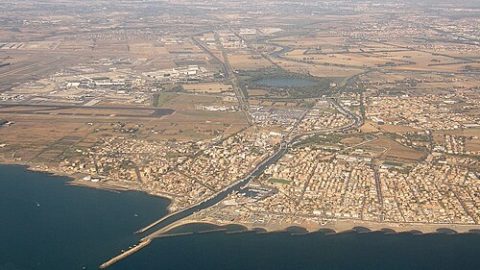
Ostia was where Rome met the sea. Its name comes from the Latin for a river mouth, and for centuries the grain that fed the capital was unloaded here, stored, taxed and sent up the Tiber on barges. At its height the town held tens of thousands of people: dockers, shippers, bakers, innkeepers and the clerks of trading firms from every coast of the Mediterranean.
Then the river let it down. Silt pushed the shore outwards until the sea was three kilometres away. New harbours to the north took the trade, malaria took the people, and by the early Middle Ages Ostia was empty. Sand and river mud covered it and kept it. What was dug out is a whole Roman town, half an hour from the centre of Rome, and on most days nearly empty. The other classic half day from the city is Tivoli, in the hills to the east. They are very different trips.
Ostia Antica: the easy one
From Piramide metro station, walk through to the Porta San Paolo terminus next door and take the suburban line towards the Lido, now signed Metromare. Ostia Antica is about half an hour down the line, and an ordinary Rome transport ticket covers the ride. From the station, cross the footbridge over the road and follow the signs for a few minutes.
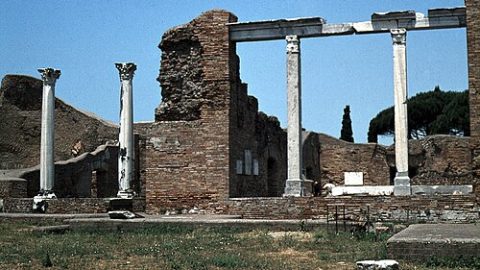
The main street runs for more than a kilometre from the gate to the old shoreline. Along it, look for:
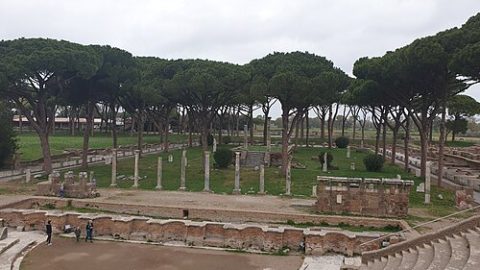
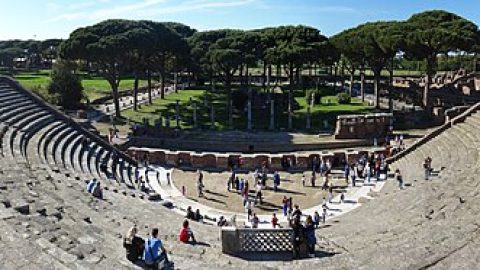
- The theatre, first built under Augustus, where you can climb the seats.
- The Square of the Corporations behind it: the offices of shipping firms, each with a mosaic on the floor showing its trade or its home port.
- The Baths of Neptune, with a large black and white mosaic of the god and his sea horses, seen from a terrace.
- A bar, the Thermopolium, with its marble counter and a painted picture of the food on offer.
- Apartment blocks of brick, several storeys high, and bakeries with their lava millstones still in place.
Allow three hours. There is little shade and the paving is uneven, so bring water and proper shoes. The site has been closed on Mondays.

A floor mosaic in the Square of the Corporations at Ostia, where shipping firms had their offices. Photo: sailko, via Wikimedia Commons, CC BY-SA 3.0.
Tivoli: three sights, and half a day is enough for one
Tivoli stands on a hill about thirty kilometres east of Rome, where the river Aniene drops out of the mountains. Regional trains run from Roma Tiburtina and take from forty-five minutes to more than an hour. Buses leave from Ponte Mammolo, on metro line B, and depend on the traffic.
Villa d'Este
Cardinal Ippolito d'Este, a son of Lucrezia Borgia, was made governor of Tivoli in 1550 after failing to become pope. He turned a hillside below his residence into a garden of fountains, all of them worked by the pressure of the river and not by pumps: the avenue of the Hundred Fountains, the Oval Fountain, and a fountain that plays an organ by water at set hours. It is in the town centre. Allow two hours, and expect a lot of steps.

The Hundred Fountains of Villa d'Este. Photo: Daderot, via Wikimedia Commons.
Hadrian's Villa
The emperor Hadrian built himself a country seat here in the second century, as large as a town: palaces, baths, libraries, a long pool lined with statues called the Canopus, and a round island retreat inside a moat. It is a ruin among olive trees, and a very large one. Allow two to three hours. It lies on the plain below Tivoli, several kilometres from the centre. A local bus links it with the town, and some buses from Rome stop within walking distance, so ask before you board.

The Canopus, the long pool of Hadrian's Villa. Photo: Livioandronico2013, via Wikimedia Commons, CC BY-SA 4.0.
Villa Gregoriana
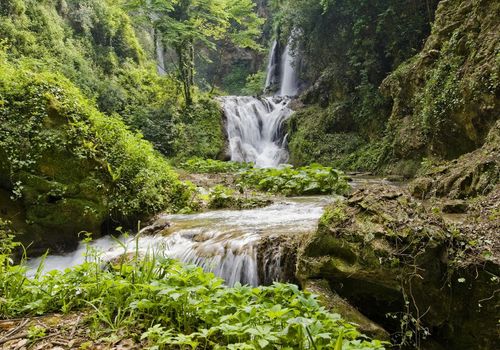
This is a park and not a house. After a flood wrecked part of Tivoli in 1826, Pope Gregory XVI had the Aniene turned through tunnels in the hillside. The river now falls more than a hundred metres into the gorge beside the town, and paths wind down past caves and Roman remains to the foot of the waterfall and up again to two small temples on the edge of the cliff. Allow an hour and a half. The paths are steep, and the park has closed for part of the winter. It is the nearest of the three to the railway station.

The great waterfall of the Aniene, seen from the paths of Villa Gregoriana. Photo: Lalupa, via Wikimedia Commons.
Which one
- You have a morning and no wish to plan: Ostia Antica. One train, one ticket, back in Rome for a late lunch.
- You will not get to Pompeii: Ostia Antica. It is the nearest thing to it, without the crowds.
- Gardens and water, or a hot day: Villa d'Este, with Villa Gregoriana if you have the legs.
- Both villas of Tivoli: a full day, and by public transport a tiring one. A coach that links the two saves a good hour.
- With small children: Ostia, where they can run in the theatre.
A third choice: Castel Gandolfo
The popes spent their summers above Lake Albano from the seventeenth century. In 2016 Pope Francis opened the palace as a museum. Trains from Roma Termini take about three quarters of an hour, and the town is a steep walk up from the station. The present pope has gone back to spending time at Castel Gandolfo, so check which rooms and gardens are open before you set out.
What the partner's tickets include
- Ostia Antica Archaeological Park. Entry to the site and its museums. You exchange a voucher for a paper ticket at the ticket office. Transport is not included, and nor is a guide.
- Villa Gregoriana. Entry to the park, by either gate. No guide.
- Villa d'Este and Hadrian's Villa with a round trip from Rome. A coach from the edge of the Borghese gardens, near Flaminio metro station, with entry to both villas and some free time in Tivoli. The listing mentions a guide at the meeting point but does not list a guided visit, so read it before you count on one. This is a day out, not a half day.
- Castel Gandolfo. Entry to the papal apartments and the Secret Garden. Getting there is up to you.
These are the tickets our partner sells for Ostia Antica, Tivoli and Castel Gandolfo, with today's prices:
-
 on WeGoTrip
Museum & Attraction Tickets Villa d'Este & Hadrian's Villa: Entry and Roundtrip from Rome
Book on WeGoTripfrom15,261 RSD
on WeGoTrip
Museum & Attraction Tickets Villa d'Este & Hadrian's Villa: Entry and Roundtrip from Rome
Book on WeGoTripfrom15,261 RSD
-
 on WeGoTrip
Museum & Attraction Tickets Villa Gregoriana: Entry Ticket
Book on WeGoTripfrom1,586 RSD
on WeGoTrip
Museum & Attraction Tickets Villa Gregoriana: Entry Ticket
Book on WeGoTripfrom1,586 RSD
-
 on WeGoTrip
Museum & Attraction Tickets Ostia Antica Archaeological Park: Entry Ticket
Book on WeGoTripfrom2,459 RSD
on WeGoTrip
Museum & Attraction Tickets Ostia Antica Archaeological Park: Entry Ticket
Book on WeGoTripfrom2,459 RSD
-
 on WeGoTrip
Museum & Attraction Tickets Castel Gandolfo: Papal Apartments and Secret Garden Entry Ticket
Book on WeGoTripfrom3,171 RSD
on WeGoTrip
Museum & Attraction Tickets Castel Gandolfo: Papal Apartments and Secret Garden Entry Ticket
Book on WeGoTripfrom3,171 RSD
Sold and delivered by WeGoTrip. You book on their site at their price; Viaqui may earn a commission, at no extra cost to you.
Practical
State sites in Italy, these among them, have been free on the first Sunday of the month, and are busier for it. Hours for each place are on our pages for Ostia Antica, Villa d'Este and Hadrian's Villa.
From here
Beside the entrance to Ostia is a small walled village with a castle built in the 1480s for the future Pope Julius II, and places to eat. The beach at Lido di Ostia is a few stops further on the same train. In Tivoli, the old streets between Villa d'Este and the temples above the gorge are worth the walk. See what else there is in Tivoli and Rome, or open the map of Italy.
Cover photo: Rabax63, via Wikimedia Commons, CC BY-SA 4.0.
Frequently asked questions
How do you get to Ostia Antica from Rome?
Take the suburban line towards the Lido from Porta San Paolo, beside Piramide metro station. Ostia Antica is about half an hour away, an ordinary Rome transport ticket is valid, and the site is a few minutes on foot from the station.
Is Ostia Antica worth visiting?
Yes. It is a whole Roman port town with a theatre, baths, mosaics, a bar and apartment blocks, half an hour from Rome and usually quiet. Allow three hours.
Can you see Villa d'Este and Hadrian's Villa in one day?
Yes, but it takes the whole day. They are several kilometres apart, so by public transport you need a local bus between them, or a coach trip that links the two.
How do you get to Tivoli from Rome by train?
Regional trains run from Roma Tiburtina to Tivoli in forty-five minutes to a little over an hour. Villa Gregoriana is the nearest sight to the station, and Villa d'Este is a walk through the town.
Is Ostia Antica better than Pompeii?
It is smaller and has no volcano, but it is far closer to Rome, much less crowded, and shows the working life of a Roman town very well. It is the better choice if you have only half a day.