




















Musée Rodin in ninety minutes: where The Thinker, The Kiss and The Gates of Hell are
A ninety-minute route through the Musée Rodin in Paris: the bronzes in the garden, the marbles in the house, the room of Camille Claudel, whether the famous works are the originals, and what each ticket includes.

In 1908 the poet Rainer Maria Rilke, who had been Auguste Rodin's secretary, wrote to tell him about a house. The Hôtel Biron, a mansion of around 1730 on the rue de Varenne, had been a convent school until the nuns were made to leave in 1904. While its fate was decided, rooms in it were let cheaply to artists: Jean Cocteau, Henri Matisse and the dancer Isadora Duncan were among the tenants. The garden had run wild.
Rodin took four rooms on the ground floor and slowly spread through the rest. When the state, which had bought the property, moved to clear the tenants out, he made an offer: all his works, his drawings and his collections, in exchange for the house becoming his museum. Parliament accepted in 1916. He died in November 1917, and the museum opened in 1919. It is still the house and the garden he chose, which is why half of the visit is outdoors.
How the museum is laid out
From the entrance on the rue de Varenne you come first into a rose garden in front of the house. The largest bronzes stand here, among clipped yews. The mansion holds eighteen rooms on two floors, arranged roughly in the order of Rodin's life. Behind it a long lawn runs down to a round pond, with more sculpture along the paths and a café under the trees.
One ticket covers the house, the garden and the temporary exhibition. Ninety minutes are enough for all of it at an easy pace. If the weather is uncertain, do the garden first.
In the garden
The Thinker
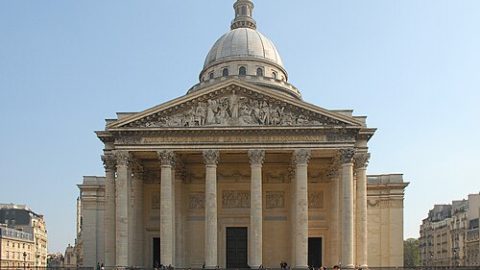
He was designed around 1880 as a small figure for the top of a doorway: the poet Dante, looking down on his own Hell. Enlarged in 1904 and cast in bronze, he was paid for by public subscription and set up in front of the Panthéon in 1906. He was moved to this garden in 1922. The gilded dome behind him belongs to the Invalides, next door.

The Thinker in the garden, on the pedestal it has stood on since 1922. Photo: Shadowgate, via Wikimedia Commons, CC BY 2.0.
The Gates of Hell
In 1880 the state ordered a bronze door for a museum of decorative arts. The museum was never built, and Rodin worked on the door for the rest of his life, 37 years, without seeing it cast. It carries close to two hundred figures. Look for the first Thinker in the panel above the doors, and for the pair of lovers who later became The Kiss, and who were taken off the door because they looked too happy for the place.

The Gates of Hell, in the rose garden. The small figure above the doors is the first Thinker. Photo: Shadowgate, via Wikimedia Commons, CC BY 2.0.
The Burghers of Calais
Six leading men of Calais who, in 1347, walked out to the English king with ropes round their necks to save their town. Rodin wanted them at ground level, among the passers-by, and not on a tall pedestal. Walk round the group: no two faces take it the same way.

The Burghers of Calais: six men walking out of their town in 1347. Photo: Shadowgate, via Wikimedia Commons, CC BY 2.0.
Balzac
A writers' society ordered a monument to the novelist and, in 1898, refused the result: a figure wrapped in a dressing gown, all head. Rodin kept the plaster at home. It was cast in bronze only in 1939.
In the house
- The Age of Bronze. The life-size nude of 1877 that made his name, partly through scandal: it was so true that he was accused of having cast it from a living man.
- The Kiss. The marble was ordered by the state in 1888. The lovers are Paolo and Francesca, from Dante. Other marble versions are in Copenhagen and London.
- The Cathedral. Two hands arched towards each other. Look again: they are two right hands.
- The Walking Man. No head, no arms, and all the movement in the legs.
- The room of Camille Claudel. Rodin's pupil, collaborator and lover, and a great sculptor in her own right. The Waltz and The Age of Maturity are here.
- Rodin's own collection. He bought paintings by his friends. Van Gogh's portrait of Père Tanguy hangs upstairs, with works by Monet and Renoir.

The Kiss, in marble, inside the house. Photo: Thibsweb, via Wikimedia Commons.
Are these the originals?
It is the question most visitors ask, and the answer depends on the material. A marble is one object. A bronze is cast from a mould, and Rodin's bronzes exist in several casts: there are Thinkers of this size in a number of cities. The museum inherited his plaster models and the right to cast from them, and French law limits the casts that count as originals to twelve. The Thinker in this garden is one of the first, the very one that stood at the Panthéon.
Tickets and the line
The Musée Rodin is not sold by time slot the way the Louvre is, and the wait at the door is usually short: a bag check, then the desk. It is closed on Mondays. Visitors under 18, and residents of the European Union under 26, are admitted free, so do not buy an adult ticket for a child.
What the partner's listings include:
- The entrance ticket covers the permanent collection, the temporary exhibition and the sculpture garden. No commentary.
- The ticket with an audio tour adds about an hour of commentary in the partner's app. Bring earphones.
- The city audio walk with a Rodin Museum ticket includes entry, but its commentary is for a walk through Paris that starts at the museum. Its exclusions say plainly that there is no audio inside.
- The audio tour "without a ticket" is commentary only.
These are the Rodin Museum tickets and audio tours our partner sells, with today's prices:
-
 on WeGoTrip
Skip The Line Tickets Musée Rodin: Skip The Line Ticket
Book on WeGoTripfrom£13.50
-
 on WeGoTrip
Museum Tickets & Passes Paris: Rodin Museum Ticket & Audio Tour
Book on WeGoTripfrom£16.20
-
 on WeGoTrip
Museum Tickets & Passes Enchanting Paris: A Journey Through Iconic Landmarks with Musée Rodin Ticket
Book on WeGoTripfrom£16.20
-
 on WeGoTrip
Art & Museums Paris: Rodin Museum Audio Tour (Without a Ticket)
Book on WeGoTripfrom£5.40
Sold and delivered by WeGoTrip. You book on their site at their price; Viaqui may earn a commission, at no extra cost to you.
Practical notes
- The nearest metro station is Varenne, on line 13, two minutes away. Copies of Rodin's sculptures stand on its platform.
- Late afternoon gives the bronzes their best light, and the garden empties in the last hour.
- Large bags go to the cloakroom.
Current hours are on our page for the Musée Rodin.
From here
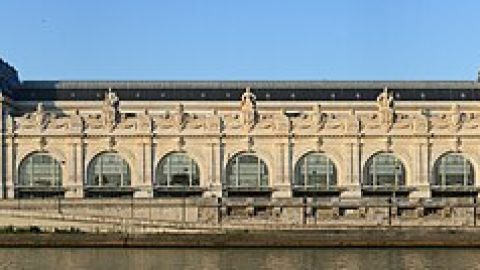
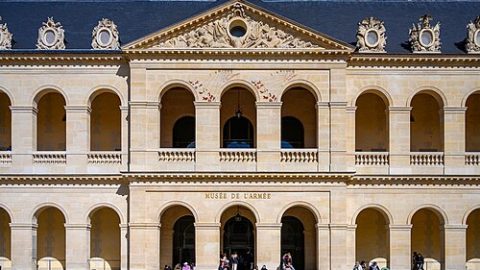
The Invalides is across the street: the Army Museum and, under the dome you saw from the garden, the tomb of Napoleon. The Musée d'Orsay, which shows a plaster of The Gates of Hell, is a quarter of an hour on foot towards the river. Rodin's other house, at Meudon, where he is buried beneath a Thinker, is a separate museum with limited opening days. For the rest of Paris, open the trip planner for France.
Cover photo: Lennart Kjellman, via Wikimedia Commons, CC BY-SA 3.0.
Frequently asked questions
What should you see at the Musée Rodin?
In the garden: The Thinker, The Gates of Hell, The Burghers of Calais and the Balzac. In the house: The Kiss, The Age of Bronze, The Cathedral, The Walking Man and the room of Camille Claudel.
How long does the Musée Rodin take?
About ninety minutes for the garden and the house at an easy pace. An hour is enough if you keep to the best-known works.
Is The Thinker at the Musée Rodin the original?
It is an original bronze cast, enlarged in 1904, and the one that stood in front of the Panthéon from 1906 until it was moved to the garden in 1922. Bronzes are cast in several copies, so other Thinkers exist elsewhere.
Where is The Kiss by Rodin?
The marble ordered by the French state in 1888 is inside the house of the Musée Rodin in Paris. Other marble versions are in Copenhagen and London.
Which day is the Musée Rodin closed?
It is closed on Mondays. Hours can change, so check the current ones before you go.