





Seeing Klimt's Kiss in Vienna: which Belvedere to book, and which art museum to choose after it
Where exactly Klimt's Kiss hangs in Vienna and which Belvedere ticket you need for it, how the Kunsthistorisches Museum and the Albertina compare if you have time for one more, and what the partner's tickets include.

In the summer of 1908 Gustav Klimt and his friends put up a temporary exhibition hall in Vienna and filled it with their own work. One room was Klimt's. On its wall hung a square canvas, not quite finished, of a couple kneeling at the edge of a meadow, wrapped in gold. He called it The Lovers.
A few years earlier the same city had quarrelled bitterly over the ceiling paintings he made for its university, and he had sworn never again to work for the state. Yet the state bought the new picture straight from the exhibition, for its modern gallery, before the paint was done. The Kiss has belonged to that gallery ever since, and the gallery does not lend it. To see it you have to come to Vienna, and to the right one of three buildings.
Which Belvedere: Upper, Lower or 21
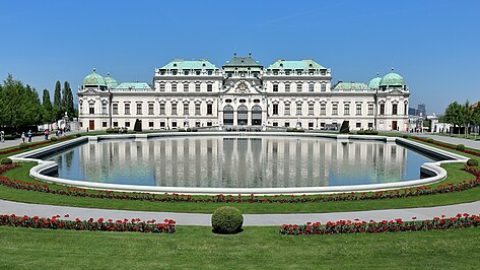
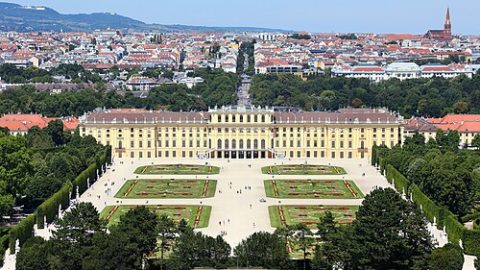
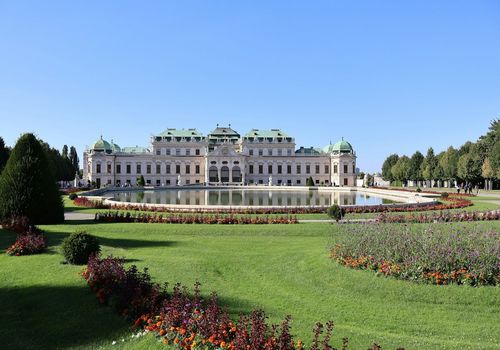
The Belvedere is two baroque palaces at either end of a sloping garden, built by Johann Lukas von Hildebrandt for Prince Eugene of Savoy, the general who commanded the Habsburg armies. The Lower Belvedere, where he lived, came first. The Upper Belvedere, finished in 1723, was for show. A third building, Belvedere 21, is a modern pavilion some way off.
- The Upper Belvedere holds the permanent collection, and The Kiss. This is the ticket you need.
- The Lower Belvedere shows temporary exhibitions, in and beside the prince's own state rooms.
- Belvedere 21 shows contemporary art.
- The garden between the two palaces is free.
Tickets for the Upper Belvedere are sold for a time slot, and the popular hours fill up in season. A ticket for one building does not open the others unless it says so.
Inside the Upper Belvedere
The Kiss hangs on the upper floor, among the largest group of Klimt's paintings anywhere, including his Judith of 1901. It is 180 centimetres square, painted in oil with gold leaf laid on, and it has a wall to itself. The crowd in front of it changes every few minutes, so wait at the side for a clear view.

The Kiss, finished in 1908. It hangs in the Upper Belvedere and is not lent. Photo: reproduction of a painting in the public domain, via Wikimedia Commons.
Do not leave straight after. The same floor has Egon Schiele's The Embrace and Death and the Maiden, and elsewhere in the building are the grimacing heads carved by Franz Xaver Messerschmidt in the eighteenth century. In the Marble Hall at the centre, on 15 May 1955, the foreign ministers of the four occupying powers signed the treaty that gave Austria back its independence. Allow an hour and a half.
One picture you will not find: the gold portrait of Adele Bloch-Bauer, which hung here for decades. It was returned to the family's heirs in 2006 and is now in New York.
If you have time for one more museum
The Kunsthistorisches Museum: old masters
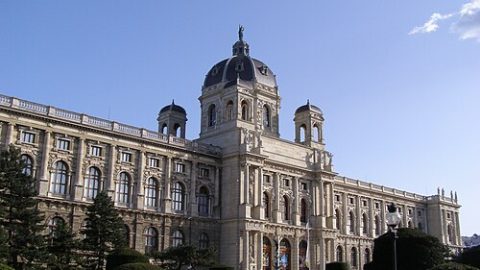
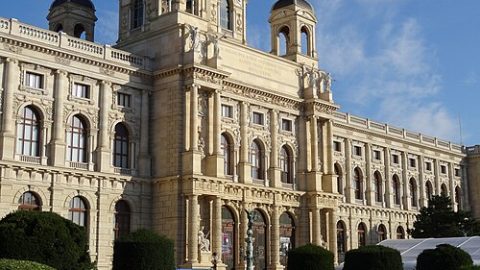
The domed palace on the Ring, opened in 1891, was built to show what the Habsburgs had collected over four centuries. Its picture gallery has the largest group of paintings by Pieter Bruegel the Elder in the world, twelve panels, with the Tower of Babel, the Peasant Wedding and the Hunters in the Snow in one room. Close by are Vermeer's Art of Painting, Raphael's Madonna of the Meadow and the portraits Velázquez painted of the Spanish infantas.
Klimt is here too. On the great staircase, look up between the arches and columns: the figures were painted by him, his brother Ernst and Franz Matsch in 1890 and 1891, long before the gold. This is the largest of the three museums: two hours for the paintings alone.

Bruegel's Hunters in the Snow, of 1565, in the Kunsthistorisches Museum. Photo: reproduction of a painting in the public domain, via Wikimedia Commons.

The Kunsthistorisches Museum across Maria-Theresien-Platz, with the monument to the empress. Photo: Manfred Werner (Tsui), via Wikimedia Commons, CC BY-SA 3.0.
The Albertina: a palace and its drawings
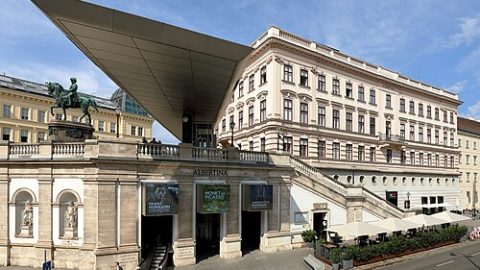
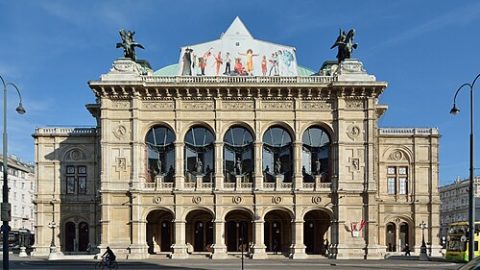
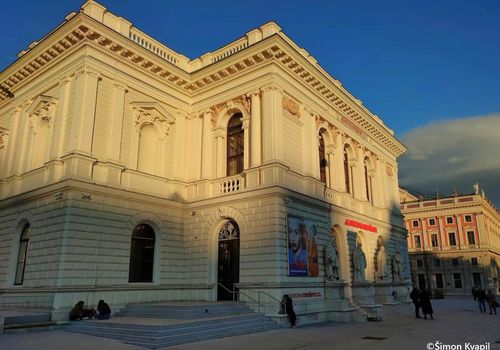
The Albertina stands on a bastion behind the State Opera. It was the palace of Duke Albert of Saxe-Teschen, who founded the collection in 1776, and its fame rests on prints and drawings, above all Dürer's Young Hare of 1502. Works on paper fade in light, so the hare is shown only rarely, and what you see most of the time is a copy.
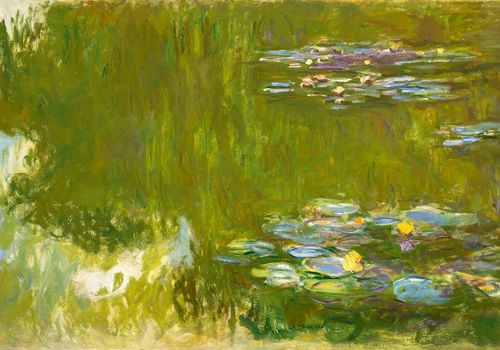
What is always on view: some twenty Habsburg state rooms, and a permanent hanging of modern painting from Monet to Picasso. Its second house, the Albertina Modern on Karlsplatz, shows art made after 1945.

The Hall of the Muses, one of the state rooms of the Albertina. Photo: Thomas Ledl, via Wikimedia Commons, CC BY-SA 4.0.
In short
- For Klimt and Vienna around 1900: the Upper Belvedere.
- For Bruegel, Vermeer and the old masters: the Kunsthistorisches Museum.
- For palace rooms and Monet to Picasso in an hour: the Albertina.
What the partner's listings include
- The Upper Belvedere ticket with a highlights audio tour and a city walk includes entry, commentary on the main works of the permanent collection in the partner's app, and an audio walk outside. Special exhibitions are not covered.
- The Kunsthistorisches Museum ticket with a highlights audio tour includes entry and about an hour of commentary on the main works.
- The Albertina Palace ticket with an audio tour includes entry, but the commentary covers the state rooms only. Its own notes exclude the art collection.
- The Albertina Palace audio tour is the same commentary without a ticket. You buy entry yourself.
- The Albertina Modern ticket with a city walk includes entry and an audio walk outside, with no commentary inside.
- An entry ticket for all Albertina locations is listed without details. Check which houses it names.
These are the tickets and audio tours our partner sells for these museums, with today's prices:
-
 on WeGoTrip
Art & Museums Vienna: Upper Belvedere Ticket & Highlights Audio Tour with a City Walk
Book on WeGoTripfromCHF 25.92
-
 on WeGoTrip
History & Heritage Vienna: Albertina Palace Ticket & Audio Tour
Book on WeGoTripfromCHF 26.57
-
 on WeGoTrip
Art & Museums Vienna: Kunsthistorisches Museum Ticket & Highlights Audio Tour
Book on WeGoTripfromCHF 23.87
-
 on WeGoTrip
Art & Museums Vienna: Albertina Modern Ticket & City Walk Audio Tour
Book on WeGoTripfromCHF 22.23
-
 on WeGoTrip
Museum & Attraction Tickets Albertina Museums: All Locations Entry Ticket
Book on WeGoTripfromCHF 31.08
-
 on WeGoTrip
Architecture Vienna: Albertina Palace Opulence Audio Tour
Book on WeGoTripfromCHF 7.39
Sold and delivered by WeGoTrip. You book on their site at their price; Viaqui may earn a commission, at no extra cost to you.
Getting there, and when
- Tram D runs from the Ring, past the Opera, to the stop Schloss Belvedere, beside the Upper Belvedere. The main railway station is about ten minutes away on foot.
- Start at the top and walk down through the garden to the Lower Belvedere, where tram 71 takes you back to the Ring.
- The first slot of the morning and the last hour and a half are the calmest in front of The Kiss.
- The Kunsthistorisches Museum is closed on Mondays for much of the year.
Current hours are on our pages for the Belvedere, the Kunsthistorisches Museum and the Albertina.
From here
More of Klimt is a short walk from the Opera: the Beethoven Frieze he painted in 1902 is in the basement of the Secession, the white building with the golden dome of leaves. For the rest of Vienna, or to fit the city into a longer trip, open the trip planner for Austria.
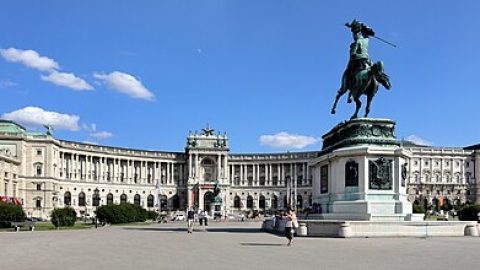
Cover photo: Diego Delso, via Wikimedia Commons, CC BY-SA 4.0.
Frequently asked questions
Where is Klimt's Kiss in Vienna?
In the Upper Belvedere, on the upper floor, among the largest collection of Klimt paintings anywhere. The gallery does not lend it, so Vienna is the only place to see it.
Is The Kiss in the Upper or the Lower Belvedere?
In the Upper Belvedere, which holds the permanent collection. The Lower Belvedere shows temporary exhibitions and Belvedere 21 shows contemporary art, each on its own ticket unless a combined one is bought.
Are the Belvedere gardens free?
Yes. The garden between the Upper and the Lower Belvedere is free to walk. Only the buildings need a ticket.
Kunsthistorisches Museum or Albertina: which one?
The Kunsthistorisches Museum for old masters, above all Bruegel, Vermeer, Raphael and Velázquez, and it needs at least two hours. The Albertina is shorter: palace state rooms and modern painting from Monet to Picasso.
How long does the Upper Belvedere take?
About an hour and a half for The Kiss, the other Klimt and Schiele rooms and the Marble Hall. Add half an hour to walk down through the garden.