





Kazimierz and Podgórze in Kraków on foot: a route, what is free, and what needs a ticket
A walking route through Kazimierz and across the Vistula to Podgórze in Kraków: the synagogues and what each asks at the door, the memorials that are free, why the Schindler Factory has to be booked, and what the partner sells here.

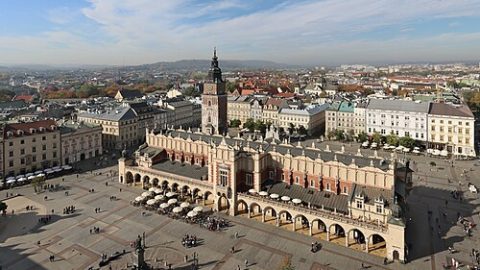
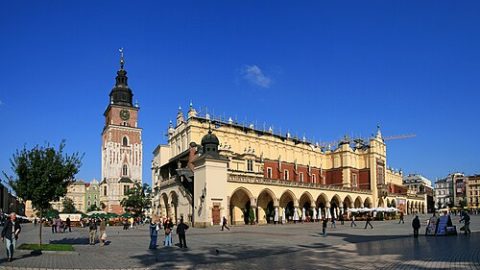
In 1335 King Casimir the Great founded a new town on an island in the Vistula, just south of the royal castle of Kraków, and gave it his own name. Kazimierz had its own walls, its own town hall and its own market square. In 1495 the Jews of Kraków were ordered to move there, into the eastern part of the town, and for four and a half centuries a Jewish quarter and a Christian one stood side by side, a few streets apart.
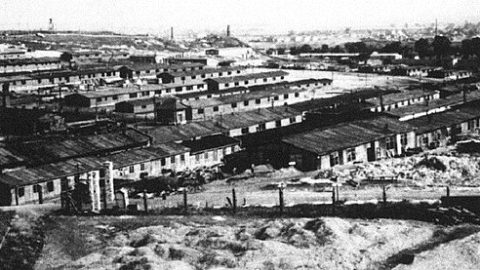
By 1939 about a quarter of the people of Kraków were Jewish. In March 1941 the German occupiers forced those who were still in the city across the river, into a ghetto of a few streets in the district of Podgórze. By March 1943 the ghetto had been emptied. Kazimierz was left standing and hollow, and stayed that way for decades, until Steven Spielberg filmed Schindler's List in its streets in 1993 and visitors began to come. The walk that tells this story has two halves, with the river between them. Most of it is free.
Szeroka Street: the heart of Jewish Kazimierz
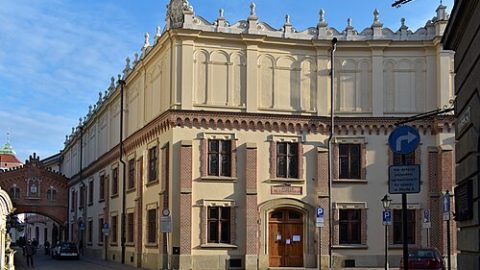
Szeroka means wide, and the street is more a long square than a street. At its southern end stands the Old Synagogue, a fortified brick building begun in the fifteenth century, the oldest synagogue still standing in Poland. It is no longer a place of worship: it is a branch of the city's museum, on the history and customs of the Jews of Kraków, with a ticket.
Halfway up the square is the small Remuh Synagogue, founded in the 1550s and still in use. A modest fee is asked at the gate, which also opens the cemetery behind. Rabbi Moses Isserles, known as the Remuh, is buried there, and pilgrims leave notes on his grave. One wall of the cemetery is built from fragments of tombstones broken during the war.

The old cemetery behind the Remuh Synagogue. Photo: Kritzolina, via Wikimedia Commons, CC BY-SA 4.0.
The other synagogues
Kazimierz has seven synagogues within a few minutes of each other, among them the Isaac, the High, the Kupa and the Tempel, on Miodowa Street, with its gilded interior of the 1860s. Each has its own door, its own small fee and its own hours, and no single ticket covers them all. Those in religious use are closed on Saturdays and on Jewish holidays. Men are asked to cover their heads.
Plac Nowy and the Christian side
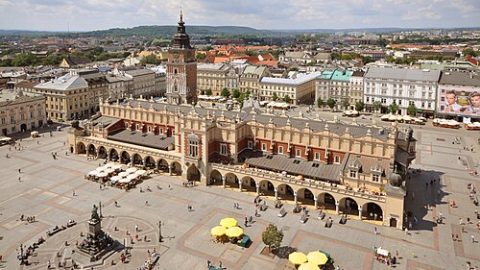
Five minutes west is Plac Nowy, the market square of the quarter. The round brick hall in the middle was built in 1900, and between the wars it served as a kosher poultry slaughterhouse. Today its hatches sell zapiekanki, long toasted open sandwiches, and the square around it is ringed with bars.
Go on south to Plac Wolnica, the old market square of Christian Kazimierz. The former town hall on it houses the Ethnographic Museum, on the folk life of Poland, and a second building of the museum, Esterka's House on Krakowska Street, shows temporary exhibitions. Both have tickets. The huge Gothic church of Corpus Christi, a street away, is free to enter.

The round hall of Plac Nowy, built in 1900. Photo: Mach240390, via Wikimedia Commons, CC BY 4.0.
Over the river to Podgórze
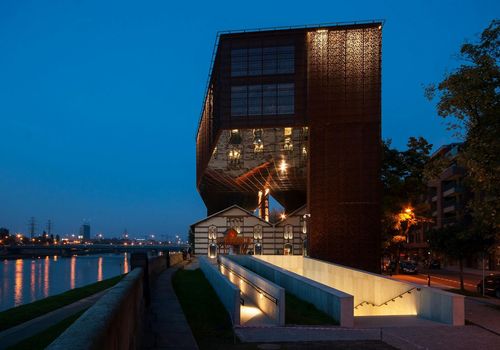
From the end of Mostowa Street the Father Bernatek footbridge, opened in 2010, crosses the Vistula. Sculpted acrobats balance on its cables. On the far bank, to the left, a block of rusted steel hangs over an old power station: Cricoteka, the centre devoted to the theatre director and artist Tadeusz Kantor. It is a museum of twentieth-century art, with a ticket, and has nothing to do with the war.

The footbridge from Kazimierz to Podgórze. Photo: Jakub Hałun, via Wikimedia Commons, CC BY-SA 4.0.
Ten minutes east is Ghetto Heroes Square. This was the main square of the ghetto, where people were gathered before the transports. Since 2005 it has been set with large empty metal chairs. On its corner is the Eagle Pharmacy, whose owner, Tadeusz Pankiewicz, kept it open inside the ghetto and used it to help the people shut in there. It is now a small museum, with a ticket.
A fragment of the ghetto wall stands on Lwowska Street, five minutes south. Its top is cut in arches, in the shape of Jewish gravestones.

The empty chairs of Ghetto Heroes Square, in Podgórze. Photo: Ingo Mehling, via Wikimedia Commons, CC BY-SA 4.0.
The Schindler Factory: book it, or leave it
The enamel factory of Oskar Schindler is on Lipowa Street, ten minutes beyond the square, on the other side of the railway. The museum in its office building is about Kraków under occupation from 1939 to 1945 as a whole. Schindler and the people he saved are one part of it.
It is the one place on this walk that cannot be left to chance. Entry is by ticket for a fixed time, numbers are limited, and in season the slots are sold out days ahead. Reserve before you plan the day, and allow an hour and a half inside. Without a slot, the walk still makes sense: the factory building, the square and the wall are all seen from the street.
What our partner sells here
- Three audio walks, in the partner's app on your own phone: one through Kazimierz and its synagogues, one from Kazimierz to the ghetto and the Schindler Factory, and one on Kraków in the Second World War. They are commentary only. The one that has the factory in its title does not include entry to it, and none includes a synagogue.
- Three entry tickets: the Ethnographic Museum on Plac Wolnica, its second building at Esterka's House, and Cricoteka.
Bring earphones for the walks. These are the audio walks and tickets our partner sells for this part of Kraków, with today's prices:
-
 on WeGoTrip
History & Heritage Krakow's Schindler's Factory & Jewish Ghetto Heritage Walk
Book on WeGoTripfrom1,175 RSD
-
 on WeGoTrip
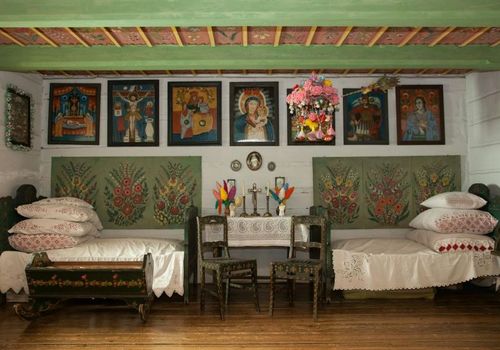
Museum & Attraction Tickets Krakow Ethnographic Museum – Esterka's House: Entry Ticket
Book on WeGoTripfrom785 RSD
-
 on WeGoTrip
Cultural Tours Krakow: Echoes of Kazimierz Audio Tour
Book on WeGoTripfrom1,175 RSD
-
 on WeGoTrip
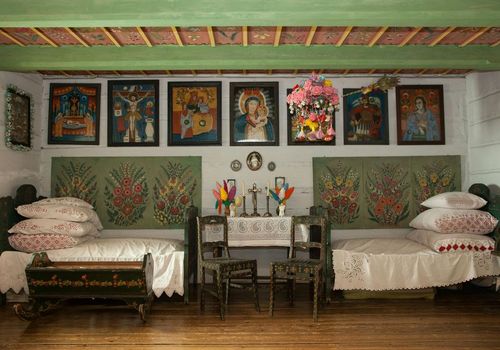
Museum & Attraction Tickets Krakow Ethnographic Museum: Entry Ticket
Book on WeGoTripfrom785 RSD
-
 on WeGoTrip
Museum & Attraction Tickets Cricoteka – Tadeusz Kantor Art Center: Entry Ticket
Book on WeGoTripfrom1,224 RSD
-
 on WeGoTrip
Cultural Tours Echoes of World War II: A Krakow Historical Journey
Book on WeGoTripfrom1,175 RSD
Sold and delivered by WeGoTrip. You book on their site at their price; Viaqui may earn a commission, at no extra cost to you.
How long, and which day
- Szeroka Street is twenty minutes on foot from the Main Market Square, or a few stops by tram.
- From Szeroka to the footbridge is ten minutes, from the bridge to Ghetto Heroes Square ten more, and the factory another ten. The whole line is under three kilometres.
- With one synagogue and the factory, allow half a day.
- Avoid Saturday if the synagogues matter to you. Several of the city's museums close or change their rules on Mondays, so check that day too.
Current hours are on our page for the Old Synagogue.
From here
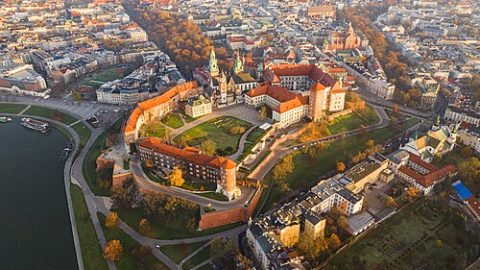
Wawel Castle is ten minutes north of Kazimierz, at the end of Stradom Street, and the Old Town begins behind it. In the evening Kazimierz itself is where much of the city goes to eat. See what else there is in Kraków, or open the trip planner for Poland.
Cover photo: Marcin Konsek, via Wikimedia Commons, CC BY-SA 4.0.
Frequently asked questions
What is there to see in Kazimierz in Kraków?
Szeroka Street with the Old Synagogue and the Remuh Synagogue and cemetery, five more synagogues, the round market hall of Plac Nowy, and Plac Wolnica with the Ethnographic Museum. Across the footbridge are Ghetto Heroes Square and the Schindler Factory.
Are the synagogues in Kazimierz free?
Mostly not. Each has its own door, its own small fee and its own hours, and no single ticket covers them all. The Old Synagogue is a museum with a ticket.
How far is the Schindler Factory from Kazimierz?
About half an hour on foot from Szeroka Street: ten minutes to the footbridge, ten to Ghetto Heroes Square and ten more to Lipowa Street.
Where was the Kraków ghetto?
Not in Kazimierz but across the river, in Podgórze. It existed from March 1941 to March 1943. Ghetto Heroes Square, the Eagle Pharmacy and a fragment of the wall on Lwowska Street mark it today.
Do you need to book the Schindler Factory in advance?
Yes. Entry is by ticket for a fixed time, numbers are limited, and in season the slots sell out days ahead.