





Genoa's old port: the aquarium, the Bigo lift and the Biosphere, and which tickets are worth it
What the Aquarium of Genoa, the Bigo panoramic lift, the Biosphere and the Columbus House each give you, how long they take, which ones to skip on a short day, and what in the old town of Genoa is free.

For most of the twentieth century the people of Genoa could not reach their own harbour. The old port, where the city began, lay behind customs walls and warehouses, and in 1965 an elevated road was built along the whole waterfront, between the palaces and the sea. The medieval alleys stopped at a fence.
The change came in 1992. Five hundred years after the first voyage of Christopher Columbus, who was born here, Genoa held an international exhibition on the sea, and the job of preparing the port went to Renzo Piano, another Genoese. He opened the quays to the public, turned the cotton warehouses into halls, and added an aquarium and a strange white structure of masts. The road is still overhead, but you walk under it in a minute. What Piano left is a waterfront with several ticket desks, and it helps to know before you arrive which of them deserve your time.
What is on the quay
The aquarium
The long building on its own pier, and the reason most visitors come. It is one of the largest aquariums in Europe, with around seventy tanks: sharks, seals, penguins, jellyfish, a shallow pool where rays come to the surface. It has been extended twice, first with a ship moored alongside, then in 2013 with a pavilion for dolphins, also by Piano. The route runs one way and takes about two and a half hours.

The shallow pool of the rays, in one of the darker halls. Photo: Francesco Crippa, via Wikimedia Commons, CC BY 2.0.
The Bigo
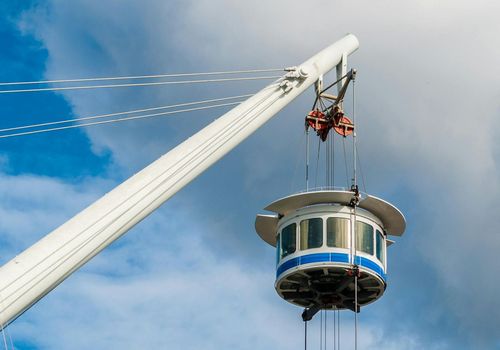
The white arms that lean out over the water are modelled on a ship's derrick, which in the port of Genoa was called a bigo. One of them carries a round glass cabin that rises about forty metres and turns slowly through a full circle. The ride lasts about ten minutes. From the top you see how the city is made: the port, the dense grey roofs of the old town, and the hills with their forts behind.
The Biosphere
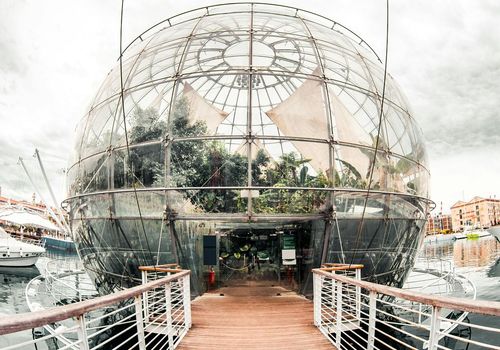
The glass ball floating beside the aquarium was added by Piano in 2001. Inside is a small piece of tropical forest: tree ferns, a few birds, turtles, butterflies. It is twenty metres across, and a visit takes a quarter of an hour.

The glass ball of the Biosphere and, beside it, the long building of the aquarium. Photo: Bbruno, via Wikimedia Commons, CC BY-SA 4.0.
Which are worth it
- The aquarium: yes, if you give it the time. It is expensive and deserves a half day. Entry is by time slot, and the middle of the day is the fullest, with school groups in spring. Book the first slot or a late one. If you have only an afternoon in Genoa and no children with you, spend it in the old town instead.
- The Bigo: yes, as a first stop. It is cheap and short, and it works as a map of the city before you walk into it. If you would sooner not pay, the terrace of Castelletto, reached by a public lift from Piazza del Portello, gives the other classic view, from the hill down to the sea.
- The Biosphere: only with small children. It is pleasant and very small. Adults see most of it through the glass from the quay.
The Columbus House
This one is not on the quay. It stands fifteen minutes' walk inland, at the foot of Porta Soprana, the twin-towered gate of 1155. Columbus lived on this spot as a boy, when his father was a wool weaver. The house you see is not the one he knew: that was wrecked when a French fleet bombarded Genoa in 1684, and what stands now was rebuilt afterwards on the same site.
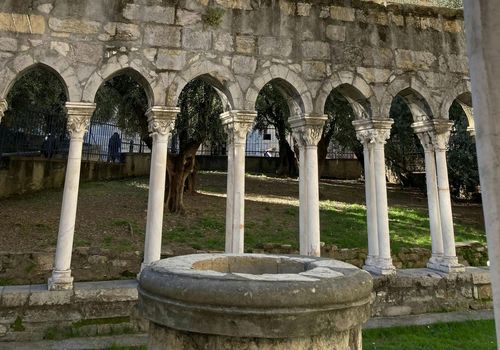
Inside there are two small floors and a visit of ten to fifteen minutes. Go for the place and its story, not for what is on show. The gate, and the ruined cloister of Sant'Andrea beside the house, are seen for free from the street.

The house of Columbus: two small floors, rebuilt after the bombardment of 1684. Photo: Enric, via Wikimedia Commons, CC BY-SA 4.0.
What is free
- The quays themselves, with the old cotton warehouses and the view back to the city.
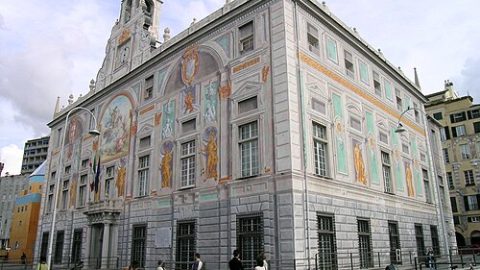
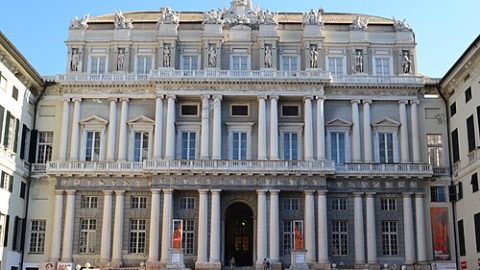
- Palazzo San Giorgio, the painted palace facing the port, begun in 1260. Tradition says that Marco Polo, taken prisoner by the Genoese, dictated his travels here.
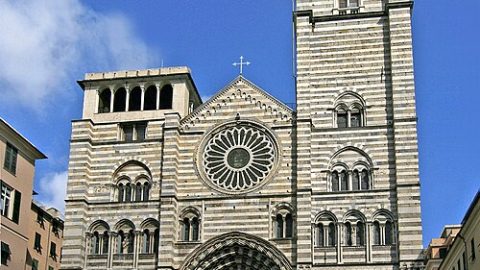
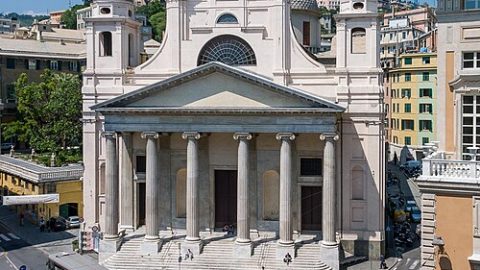
- The Cathedral of San Lorenzo, with its black and white striped front. In the right aisle stands a British naval shell that came through the roof in February 1941 and did not explode. The treasury below has a ticket.
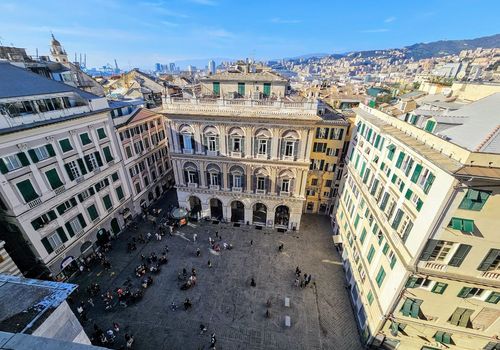
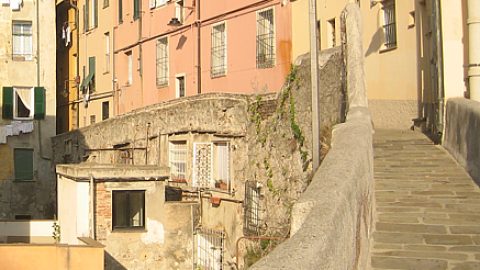
- The alleys, called caruggi: one of the largest medieval centres in Europe, still lived in, with shrines on the corners. They are safe by day. Keep to the busier ones after dark.
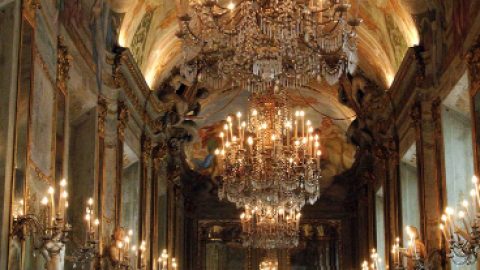
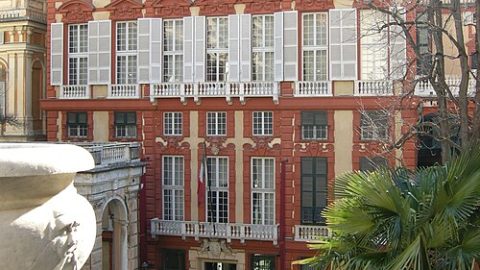
- Via Garibaldi, the sixteenth-century street of palaces that UNESCO listed in 2006. Walking it and looking into the courtyards is free. Three of the palaces form a museum with one ticket.

The striped front of San Lorenzo. The cathedral is free to enter. Photo: Zairon, via Wikimedia Commons, CC BY-SA 4.0.
Reading the partner's listings
- Aquarium tickets come as plain entry, and as entry with a lunch or with a street food tasting. On the last two, read where and when the food is served before you choose a time.
- The Bigo, the Biosphere and the Columbus House are each sold as a separate fast track ticket. "Fast track" means the ticket is already in your hand. None of them takes long to enter in any case.
- The partner also has audio walks through the old town. They are commentary only, and entry to anything on the way is bought separately.
These are the tickets our partner sells in Genoa, with today's prices:
-
 on WeGoTrip
Museum & Attraction Tickets Bigo Panoramic Lift: Fast Track Ticket
Book on WeGoTripfrom13.34 KM
-
 on WeGoTrip
Museum & Attraction Tickets Biosphere: Fast Track Ticket
Book on WeGoTripfrom13.34 KM
-
 on WeGoTrip
Museum & Attraction Tickets Aquarium of Genoa: Skip The Line Ticket
Book on WeGoTripfrom76.06 KM
-
 on WeGoTrip
Museum & Attraction Tickets Christopher Columbus House: Fast Track Ticket
Book on WeGoTripfrom23.37 KM
-
 on WeGoTrip
Museum & Attraction Tickets Aquarium of Genoa: Entry Ticket + Lunch
Book on WeGoTripfrom77.86 KM
-
 on WeGoTrip
Museum & Attraction Tickets Genoa Aquarium: Entry Ticket + Street Food Tasting
Book on WeGoTripfrom91.22 KM
Sold and delivered by WeGoTrip. You book on their site at their price; Viaqui may earn a commission, at no extra cost to you.
A day in order
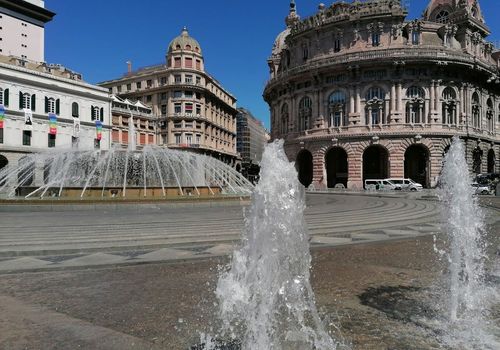
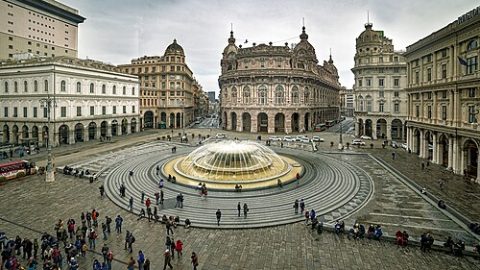
Take the Bigo first, for the view. Do the aquarium at your slot. Then walk under the elevated road to Palazzo San Giorgio, up Via San Lorenzo to the cathedral, on to Piazza De Ferrari and its fountain, and round the corner to Porta Soprana and the Columbus House. Finish on Via Garibaldi. The whole route is about two kilometres and mostly flat. Current hours are on our page for the Aquarium of Genoa.
From here
From the old port, boats leave in season for Camogli, San Fruttuoso and Portofino. The sea museum at the western end of the harbour sells its own tickets. Trains along the coast reach the Cinque Terre in about an hour and a half. See the pages for Genoa Cathedral, Palazzo San Giorgio and the rest of Genoa, or open the attractions map of Italy.
Cover photo: Zairon, via Wikimedia Commons, CC BY-SA 4.0.
Frequently asked questions
Is the Bigo lift in Genoa worth it?
Yes, as a short first stop. The glass cabin rises about forty metres and turns through a full circle in about ten minutes, which shows you the port, the old town and the hills at once.
How long does the Aquarium of Genoa take?
About two and a half hours on the one-way route. Entry is by time slot, and the first and last slots of the day are the quietest.
What is the glass ball in the port of Genoa?
It is the Biosphere, added by Renzo Piano in 2001. It holds a small tropical garden with ferns, birds and butterflies, and takes about a quarter of an hour to visit.
Is the Columbus House in Genoa worth visiting?
It is a visit of ten to fifteen minutes on two small floors. The house was rebuilt after the bombardment of 1684 on the site where Columbus lived as a boy, so go for the place and not for the exhibits.
What can you see in Genoa for free?
The quays of the old port, the outside of Palazzo San Giorgio, the Cathedral of San Lorenzo, the medieval alleys, Via Garibaldi with its palace courtyards, and Porta Soprana.