









Dubrovnik's city walls: when to walk them, what the ticket covers, and whether to buy the pass
How to walk the city walls of Dubrovnik: the three entrances, the best hours, what the ticket covers, how it compares with the Dubrovnik Pass, and what is free in the Old Town at street level.

On the morning of 6 April 1667 an earthquake brought down most of Dubrovnik in a few seconds. Several thousand people died, the rector of the republic among them, and fires burned for days afterwards. The city of Gothic and Renaissance palaces was gone. The walls around it barely moved.
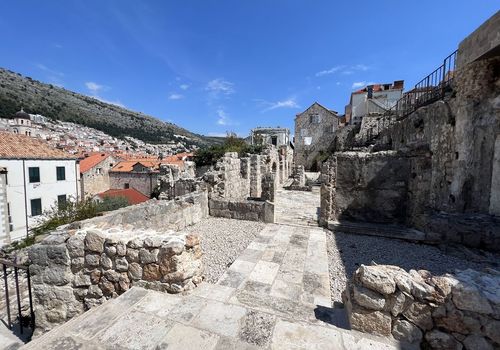
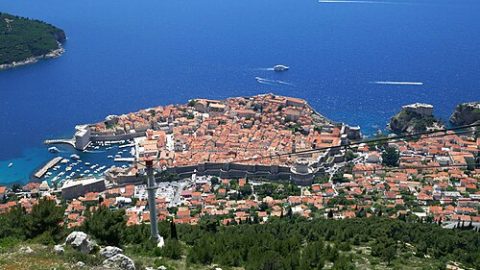
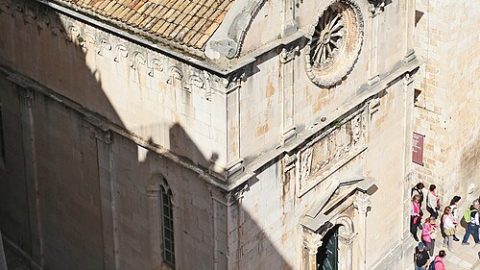
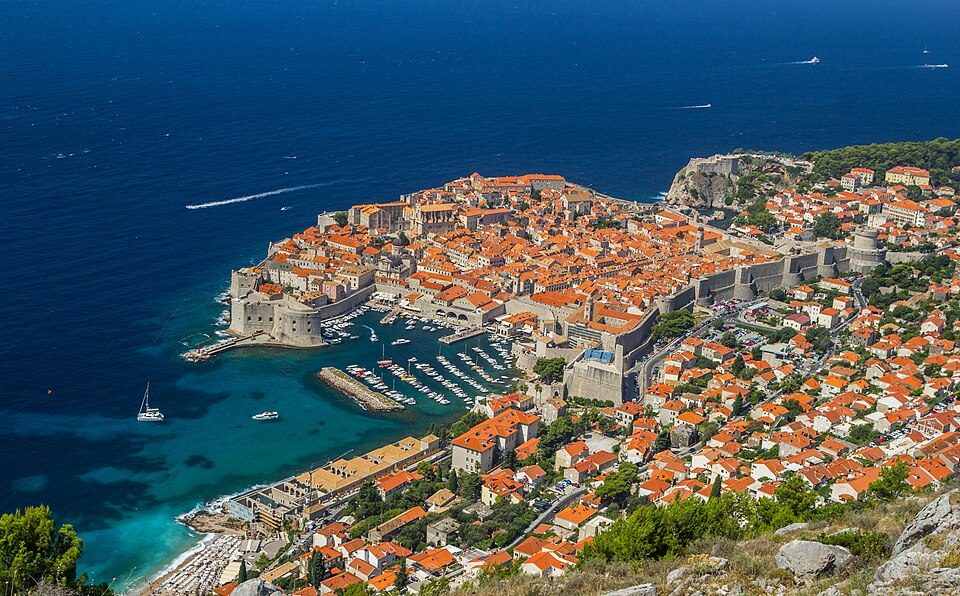
They were tested again in the autumn of 1991, when the Yugoslav army shelled the old town from the hills and from the sea, and more than half of its buildings were hit. That is why the roofs, seen from the top of the walls, come in two colours: the bright orange of tiles laid in the 1990s and, here and there, the paler brown of the ones that survived. The walk around the walls is the best thing to do in Dubrovnik and the most expensive. It deserves a little planning.
What the walk is
The walls form an unbroken ring of just under two kilometres, up to twenty-five metres high, built for the most part between the 14th and the 16th century. You walk on top of them, one way only, anticlockwise. There are three places to go up:
- Pile Gate, the main entrance of the old town on the west, by a steep stair just inside the gate. It has the longest line.
- St John's Fort, at the old port.
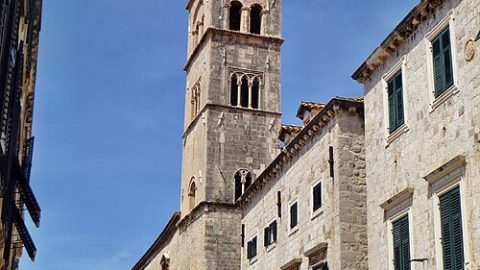
- Near Ploče Gate, on the east side, by the Dominican monastery. It is usually the quietest.
Allow an hour and a half to two hours. There are many steps, no lift and almost no shade. A few kiosks on the sea side sell drinks.

The roofs from the wall walk: newer tiles in bright orange, older ones paler. Photo: Richard Mortel, via Wikimedia Commons, CC BY 2.0.
What you see, in order from Pile Gate
From the Pile entrance the route turns towards the sea. You pass above Fort Bokar and follow the south wall, which rises straight out of the rocks, with the island of Lokrum offshore. At the south-east corner St John's Fort closes the old port. The route then runs above the harbour to the Ploče side and climbs along the landward wall, the thickest, to the round Minčeta Tower, finished in 1464. Its top is the highest point of the circuit, and the place from which the whole town and the main street lie below you. From there it is downhill to Pile.

The Minčeta Tower, the highest point of the circuit. Photo: Ramón, via Wikimedia Commons, CC BY-SA 2.0.
When to walk them
In season, be at an entrance when it opens in the morning, or go up in the last two hours before closing. Between ten and three the walkway carries the passengers of the cruise ships, and in July and August the stone gives back the heat of the sun. Late afternoon has the better light on the roofs. Check the closing hour first, because the staff clear the walls on time.
If you start at the Ploče entrance instead of Pile, you do the long climb to Minčeta at the beginning, while you are fresh, and finish along the sea. From November to March the hours are short, the walkway is nearly empty and the ticket has in past years cost less.
What the ticket covers
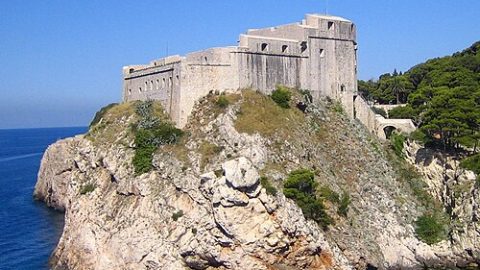
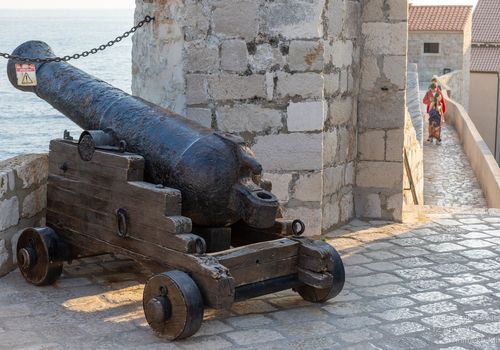
A ticket is one circuit of the walls. It is checked again along the way, so keep it at hand, and you cannot come down for lunch and go back up. It has long also covered Fort Lovrijenac, the fortress on a rock outside the walls to the west of Pile Gate. Its walls are about twelve metres thick towards the sea and well under one metre towards the town, so that no commander could hold it against the republic. Over its door is carved, in Latin: freedom is not sold for all the gold in the world.
The ticket does not cover the museums, the monasteries or the cable car.

Fort Lovrijenac on its rock, outside the walls to the west. Photo: Sumitsurai, via Wikimedia Commons, CC BY-SA 4.0.
Ticket or Dubrovnik Pass
The Dubrovnik Pass is the city's card, sold for one, three or seven days. It includes the walls with Fort Lovrijenac, the main museums, among them the Rector's Palace, and the city buses. In recent seasons the one-day pass has been sold at the same price as the wall ticket on its own. If that is still so when you go, the pass is the one to buy, even for the walls alone. Compare the two before you pay, and note that the pass, like the ticket, allows a single walk around the walls.
What our partner sells: commentary, not entry
Our partner does not sell the wall ticket. What it sells in Dubrovnik are self-guided audio walks in its app, on your own phone:
- A half-hour tour of the defences: the gates, forts and towers, from Pile Gate to the Minčeta Tower.
- Two-hour walks of the walled town, from Pile Gate by the cathedral and the Jesuit stairs, ending at the walls or at the old port.
- Shorter walks of the Old Town, an hour to an hour and a half along the main street, the Sponza Palace and the Rector's Palace.
None of them includes a ticket to the walls or to anything else. If you want a commentary in your ears on top of the walls, you buy the audio walk and the wall ticket separately. Bring earphones, and download the tour before you set out.
These are the audio walks our partner sells in Dubrovnik, with today's prices:
-
 on WeGoTrip
Walking Tours Dubrovnik: Self-Guided Audio Walk Through the City’s Mighty Walls
Book on WeGoTripfrom₴355
-
 on WeGoTrip
Sightseeing Tickets Dubrovnik: Self-Guided Audio Walk Through the Old Town Walls
Book on WeGoTripfrom₴507
-
 on WeGoTrip
Sightseeing Tickets Dubrovnik: Self-Guided Audio Walk Through the Walled Old Town
Book on WeGoTripfrom₴507
-
 on WeGoTrip
Cultural Tours Dubrovnik: Adriatic Essence Audio Tour
Book on WeGoTripfrom₴311
-
 on WeGoTrip
Walking Tours Dubrovnik: self-guided audio tour through the Old Town
Book on WeGoTripfrom₴355
-
 on WeGoTrip
Sightseeing Tickets Dubrovnik: Self-Guided Audio Walk Through the Pearl of the Adriatic
Book on WeGoTripfrom₴507
Sold and delivered by WeGoTrip. You book on their site at their price; Viaqui may earn a commission, at no extra cost to you.
What is free at street level
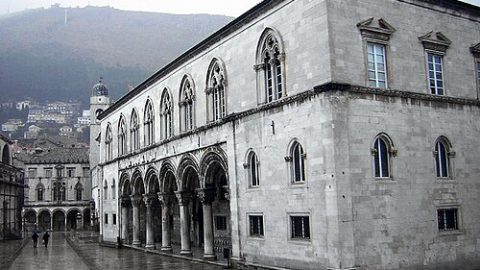
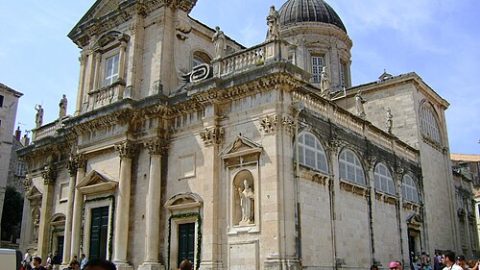
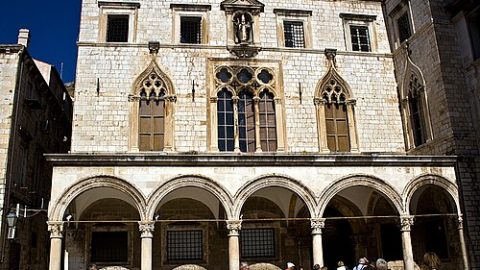
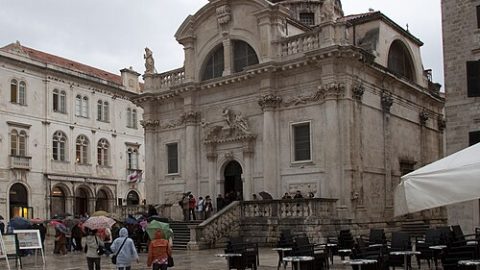
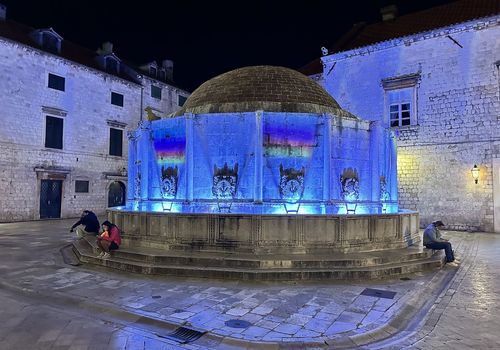
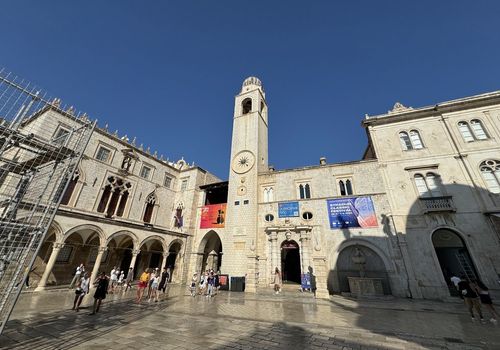
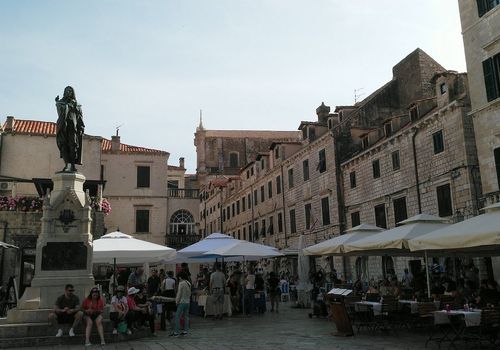
The old town itself costs nothing. The Stradun, the main street, runs some three hundred metres from Pile Gate to the old port, paved in limestone that centuries of feet have polished like glass. At its west end stands the large domed fountain that Onofrio della Cava built in 1438, at the end of the aqueduct. At its east end are Orlando's Column, the arcade of the Sponza Palace, the church of St Blaise and, round the corner, the cathedral. The old port and the lanes that climb in steps on both sides are free too.

The east end of the Stradun, with the arcade of the Sponza Palace on the right. Photo: Jerzy Strzelecki, via Wikimedia Commons, CC BY-SA 3.0.
From here
Use the same ticket for Fort Lovrijenac while it is valid. For the view from above, the cable car climbs Mount Srđ, behind the town: see our page for the Srđ cableway. Boats to Lokrum leave from the old port. Current hours for the walls of Dubrovnik are on our page. For the rest of Dubrovnik, or to fit it into a longer trip, open the trip planner for Croatia.
Cover photo: dronepicr, via Wikimedia Commons, CC BY 2.0.
Frequently asked questions
What is the best time to walk the Dubrovnik walls?
At opening time in the morning or in the last two hours before closing. Between ten and three in season the walkway is crowded with cruise passengers, and in summer it is very hot, with almost no shade.
How long does it take to walk the walls of Dubrovnik?
An hour and a half to two hours for the full circuit of just under two kilometres, with stops for the views. The route is one way and has many steps.
Is Fort Lovrijenac included in the walls ticket?
The wall ticket has long also covered Fort Lovrijenac, the fortress on the rock west of Pile Gate. Check the validity printed on your ticket, and keep it after you leave the walls.
Is the Dubrovnik Pass worth it for the walls?
In recent seasons the one-day pass has cost the same as the wall ticket alone, while adding museums and buses. Compare the two prices before you buy: if they are still level, the pass is the better choice.
Which entrance to the Dubrovnik walls is least crowded?
The entrance near Ploče Gate, on the east side of the old town, is usually the quietest. The one just inside Pile Gate is the busiest.