











































City of Arts and Sciences in Valencia: which ticket to buy, and what you can see for free
The City of Arts and Sciences in Valencia sells entry to three separate buildings, alone or combined. How long each one takes, who each is for, which combination fits your day, and what you see without any ticket.

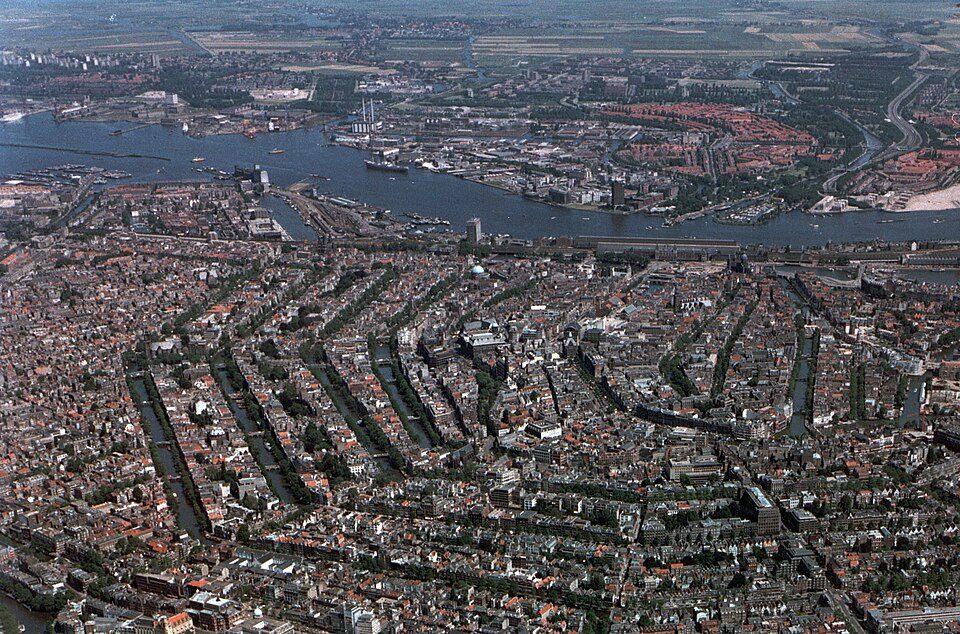
On 14 October 1957 the river Turia burst its banks twice in one day and flooded most of Valencia. At least 81 people died. The government in Madrid decided that the river would never run through the city again, and over the following years it was moved into a new channel to the south. That left a dry riverbed, several kilometres long, curving through the middle of town.
The first plan was to put a motorway in it. People in Valencia campaigned for years under a slogan that said the riverbed was theirs and they wanted it green, and they won: from the 1980s it became a long park. At its seaward end, from 1998 onwards, the region built the City of Arts and Sciences, designed mostly by Santiago Calatrava, who was born in Valencia. It looks like one place. For a visitor it is three paid attractions with separate doors, sold alone or in every combination, and a good deal of open space that is free.
What is there
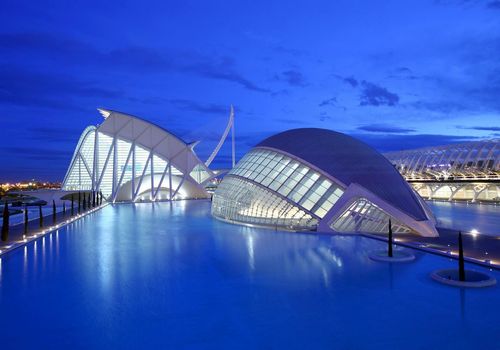
The complex is a line of white buildings about two kilometres long, set in shallow pools. From west to east:
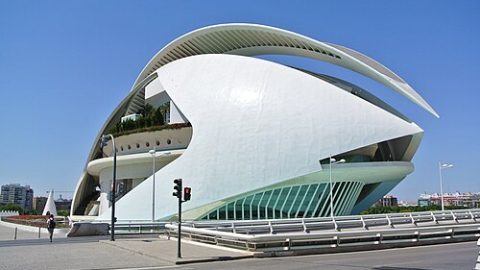
- The opera house (Palau de les Arts), opened in 2005. You go in for a performance or a guided visit.
- The Hemisfèric, opened in 1998: the building shaped like an eye. Inside is a single domed hall that shows large-format films and planetarium programmes.
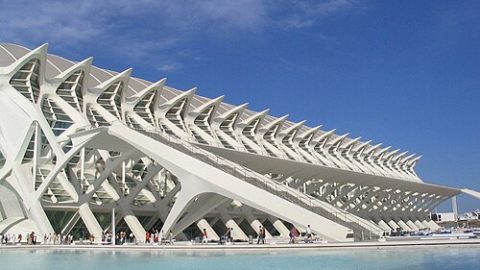
- The science museum, opened in 2000: the long ribbed building, with three floors of hands-on exhibits.
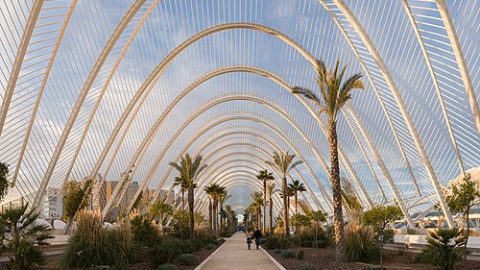
- The Umbracle: a raised garden walk under white arches, along the south side.
- The Àgora, the tall blue building, which now houses an art centre with a ticket of its own.
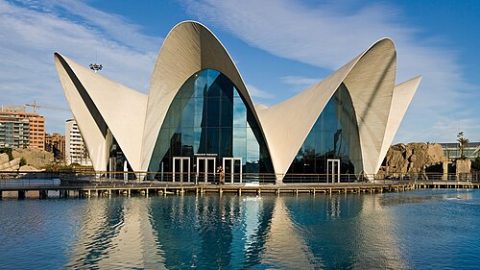
- The Oceanogràfic, opened in 2003, at the far end: the aquarium, under shell-shaped roofs designed by Félix Candela.

The science museum along its pool. Walking here costs nothing, at any hour. Photo: Diego Delso, via Wikimedia Commons, CC BY-SA 3.0.
What you can see for free
All of the outside. You can walk the whole length of the complex, along the pools, under the ribs of the museum, across the bridges and through the Umbracle, at any hour, without a ticket. The buildings are the main sight, and they are best in the last hour of daylight and just after, when the pools are still and the lights come on.
The Turia park itself is free too. From the old town it is a flat walk or bicycle ride of about three kilometres along the riverbed, under the old bridges, to the opera house.

The arches of the Umbracle, the free garden walk on the south side. Photo: Sjaak Kempe, via Wikimedia Commons, CC BY 2.0.
The three tickets, one by one
The Oceanogràfic
The largest aquarium in Europe, laid out as separate pavilions around a lake, each for one sea or climate: the Mediterranean, the tropics, the Arctic with its belugas, the wetlands under a netted dome, two long underwater tunnels. Allow three to four hours. Much of the walking between pavilions is outdoors, so it is tiring in the midday heat of July and August. It is by far the most expensive of the three, and the one children remember.
The science museum
Its motto is that it is forbidden not to touch. The exhibits are built to be handled, which suits children from about seven and curious adults, and leaves toddlers with little to do. Allow two hours. It is indoors and cool, which makes it the choice for a wet day or a very hot afternoon. If you only want the architecture, the ground floor hall can be seen from the entrance.

Inside the science museum: open floors under the white ribs. Photo: Steven Lek, via Wikimedia Commons, CC BY-SA 4.0.
The Hemisfèric
A film of about three quarters of an hour on a huge curved screen. The ticket is for one session at a fixed time, and the programme changes through the day, so look at what is showing before you choose. Commentary in other languages comes through headphones. It is the cheapest ticket and the shortest visit, and it fits in the gap before or after one of the other two.
Which combination for which day
- Two hours, no children. Walk the outside for free. Add the Hemisfèric if a film interests you.
- Half a day with children. The Oceanogràfic alone. Go at opening time and do the outdoor pavilions first.
- A full day. The Oceanogràfic in the morning and the science museum in the afternoon, when you want to be indoors. This is the combination most people are happiest with.
- All three. Possible in one day only if you start at opening and book a late film. Check whether your combined ticket lets you use the parts on different days: if it does, split them.
- A rainy day. The science museum and the Hemisfèric, which are next to each other.
Reading the partner's listings
- Single tickets are sold for the science museum, for the Hemisfèric and for the Oceanogràfic. "Skip the line" here means you do not queue at the ticket desk. Everyone passes the same door.
- Tickets for two pair the Oceanogràfic with the Hemisfèric, or with the science museum.
- The ticket for three covers all the paid buildings named above except the opera house and the art centre.
- None of these includes a guide. Before paying, read on the listing how the film session is chosen and for how long the parts stay valid.
These are the tickets our partner sells for the City of Arts and Sciences, with today's prices:
-
 on WeGoTrip
Museum & Attraction Tickets Oceanogràfic, Science Museum & Hemisfèric: Entry Ticket
Book on WeGoTripfrom265 zł
-
 on WeGoTrip
Museum & Attraction Tickets Oceanogràfic & Science Museum: Entry Ticket
Book on WeGoTripfrom234 zł
-
 on WeGoTrip
Museum & Attraction Tickets Oceanogràfic & Hemisfèric: Entry Ticket
Book on WeGoTripfrom232 zł
-
 on WeGoTrip
Museum & Attraction Tickets Science Museum Valencia: Skip The Line Ticket
Book on WeGoTripfrom51 zł
-
 on WeGoTrip
Museum & Attraction Tickets Hemisfèric: Skip The Line Ticket
Book on WeGoTripfrom46 zł
-
 on WeGoTrip
Museum & Attraction Tickets Oceanogràfic de Valencia: Entry Ticket
Book on WeGoTripfrom222 zł
Sold and delivered by WeGoTrip. You book on their site at their price; Viaqui may earn a commission, at no extra cost to you.
Getting there and around
City buses run from the centre to both ends of the complex, and a taxi from the old town takes about ten minutes. On foot or by bicycle, follow the Turia park. The Oceanogràfic is at the eastern end, a quarter of an hour's walk from the opera house, so decide where you start before you get off the bus. There is little shade between the buildings: in summer carry water and a hat. Opening hours change with the season and are on our page for the City of Arts and Sciences.
From here
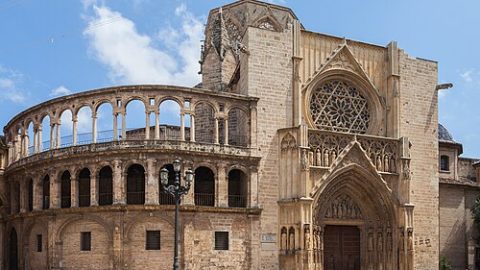
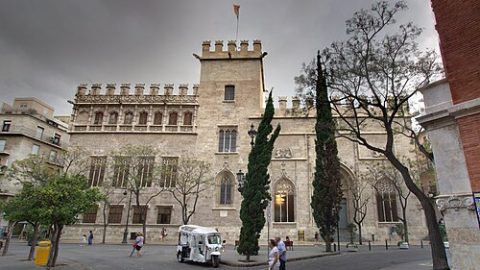
The beaches of Valencia are a short bus or taxi ride further east. Back up the riverbed, the old town holds the cathedral, the Silk Exchange, a Gothic trading hall on the UNESCO list, and the Central Market, which is free to walk through in the morning. Our pages for the Oceanogràfic and for Valencia have more, and the trip planner for Spain fits the city into a longer route.
Cover photo: Diliff, via Wikimedia Commons, CC BY 2.5.
Frequently asked questions
Is the City of Arts and Sciences free to walk around?
Yes. The outside of the whole complex, its pools, bridges and the Umbracle garden walk are open without a ticket. Only the insides of the Hemisfèric, the science museum and the Oceanogràfic are paid.
Which ticket should you buy for the City of Arts and Sciences?
With children and half a day, the Oceanogràfic alone. For a full day, the Oceanogràfic with the science museum. The Hemisfèric is a short film that fits before or after either.
How long do you need at the Oceanogràfic?
Three to four hours. The pavilions are spread around a lake and much of the walking between them is outdoors.
Is the Hemisfèric worth it?
It is one film of about three quarters of an hour on a very large curved screen, at a fixed time. It is worth it if a film in the programme interests you. The building itself is seen for free from outside.
Can you do the Oceanogràfic and the science museum in one day?
Yes. Do the Oceanogràfic in the morning and the museum, which is indoors, in the afternoon. Adding the Hemisfèric as well makes a very long day.