





Archaeological sites · Sarandë
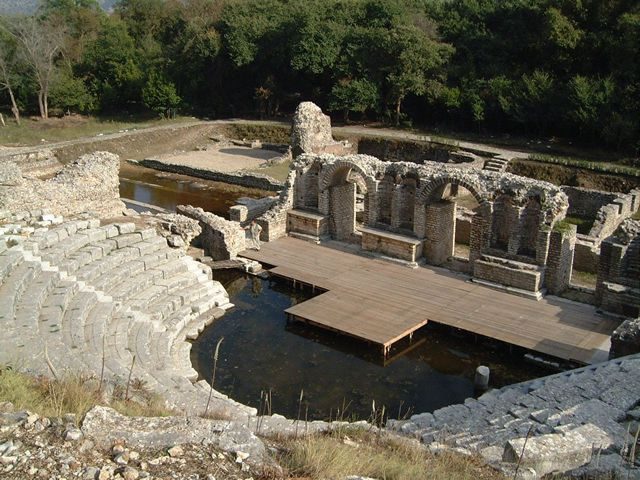
Butrint
Butrinti
UNESCO World Heritage Site
ancient city of Albania
- Archaeological sites
Photo: Marc Morell · CC BY-SA 3.0 · Wikimedia Commons
About
About Butrint
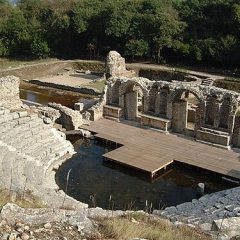
Butrint (Greek: Βουθρωτόν and Βουθρωτός, romanized: Bouthrōtón, Latin: Buthrōtum, Albanian: Butrint) was an ancient Greek polis and later Roman city and the seat of an early Christian bishopric in Epirus. Originally a settlement of the Greek tribe of the Chaonians, it later became part of the state of Epirus and later a Roman colonia and a Byzantine bishopric.
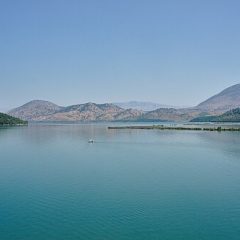
It entered into decline in Late Antiquity, before being abandoned during the Middle Ages after a major earthquake flooded most of the city. In modern times it is an archeological site in Vlorë County, Albania, some 14 kilometres (8.7 mi) south of Sarandë, close to the Greek border. It is located on a hill overlooking the Vivari Channel and is part of the Butrint National Park.
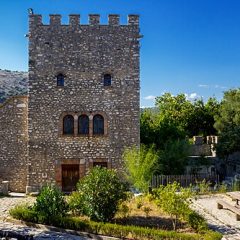
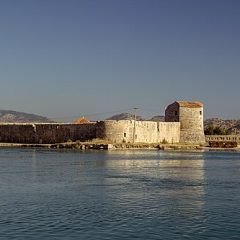
Today, Bouthrotum is a Latin Catholic titular see and also features the Ali Pasha Castle. The city is considered one of the most important archaeological sites in Albania.
On the strength of the immense wealth of cultural, historical and natural value with a considerable history, Butrint was declared a UNESCO World Heritage Site in 1992 and further a National Park in 2000 under the leadership of Auron Tare, its first director.
Text from Wikipedia, available under CC BY-SA 4.0.
Photos: Marmontel (CC BY 2.0) · Marcin Konsek (CC BY-SA 4.0) · Sali Jonuzi (CC BY-SA 4.0) · Marcin Konsek (CC BY-SA 4.0) · Marcin Konsek (CC BY-SA 4.0) · Olachemistry (CC BY-SA 4.0), Wikimedia Commons.
Good to know
- Opening hours
- Mon-Sun 08:00-17:00 from OpenStreetMap; check before you go
- Official website
- butrint.al
In Sarandë
More to see here



Butrint
1 / 7