




















Archaeological sites · Athens
Beulé Gate
Πύλη Μπελέ
late Roman fortified gate at the Athens Acropolis
- TypeArchaeological sites
- WhereAthens, Greece
Photo: unknown author · Public domain · Wikimedia Commons
About
About Beulé Gate
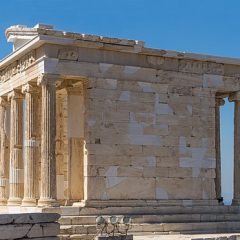
The Beulé Gate (French pronunciation: [bœ'le]) is a fortified gate, constructed in the Roman period, leading to the Propylaia of the Acropolis of Athens. It was constructed almost entirely from repurposed materials (spolia) taken from the Choragic Monument of Nikias, a monument built in the fourth century BCE and demolished between the second and fourth centuries CE.
The dedicatory inscription from Nikias's monument is still visible in the entablature of the Beulé Gate. The gate was integrated into the Post-Herulian Wall, a late Roman fortification built around the Acropolis in the years following the city's sack by the Germanic Heruli people in 267 or early 268 CE.
Its construction marked the beginning of a new phase in the Acropolis's use, in which it came to be seen more as a potential defensive position than in the religious terms that had marked its use in the classical period. During the medieval period, the gate was further fortified and closed off, before being built over with a bastion in Ottoman times.
The monument was discovered by the French archaeologist Charles Ernest Beulé in 1852, and excavated between 1852 and 1853.
Text from Wikipedia, available under CC BY-SA 4.0.

In Athens
More to see here


Beulé Gate
1 / 1